

When the coronavirus pandemic first broke out, according to Prof. Paul Elkington, it became quickly clear that he and his colleagues would run out of PPE (personal protective equipment).
Prof. Elkington, a respiratory consultant at University Hospital Southampton, says, "I'm a lung doctor, and by mid-March 2020 we realized the process we had to protect our staff was not going to be sustainable.".
We started out using disposable FFP3 masks, gowns, and visors, but it became clear after a few weeks that we wouldn't be able to keep up with the supplies. " .
As the airborne coronavirus spread throughout the world, the urgent need for PPE severely strained supply chains and forced many nations to ration supplies.
Doctors in the UK, like Prof. Elkington, were compelled to improvise. The PeRSo is a portable, battery-powered respirator device that is worn over the head like a hood and has a clear window developed by his team.
It operates using a replaceable hepa (high-efficiency particulate absorbing) filter, which sanitizes incoming air, and costs around £225 per unit. It is portable and reusable.
Over time, it became evident that PeRSo was not only more efficient and comfortable than disposable PPE, but also more cost-effective.
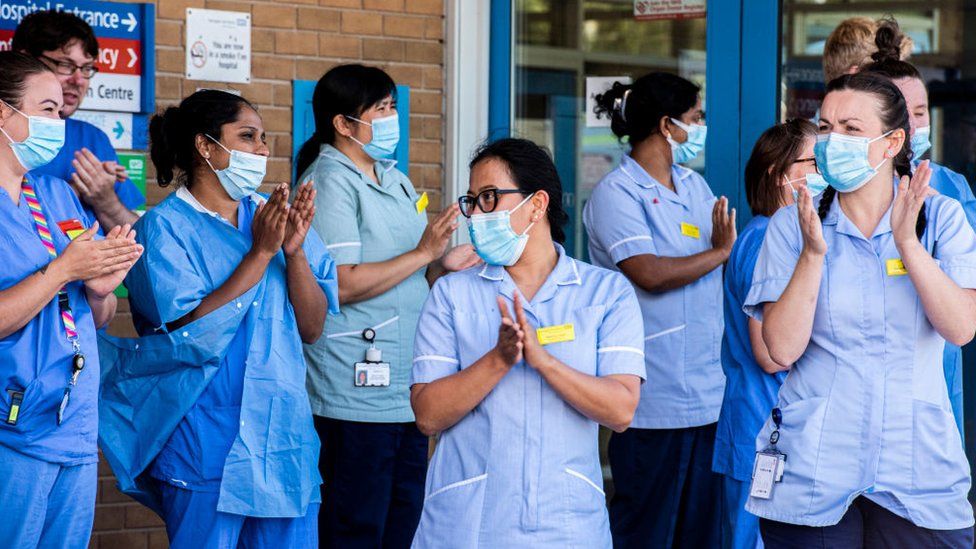
In addition to Southampton, 16 other NHS trusts also used the PeRSo respirator. It's important to note that staff absences were lower at Prof. Elkington's hospital than they were nationwide.
He and a colleague, Prof. Hywel Morgan, later shared an MBE for creating the respirator, but they ultimately decided against patenting their invention despite discussions with Dyson. As an alternative, they made it open source by posting the design online for others to copy in places like South Africa.
Because so many people were burned, the provision of PPE is still a "deeply emotive issue" for everyone in 2023, according to a senior NHS manager who requested anonymity.
He specifically mentions how purchasing managers at the height of the crisis were forced to buy products, primarily from China, at exorbitant prices, some of which turned out to be subpar or even fake.
In just the first six months of the crisis, the NHS used three billion PPE items, according to research.
According to the Department of Health and Social Care's accounts for 2020–21, however, £673 million in PPE purchased during the pandemic was deemed useless, and $750 million in equipment was not used prior to its expiration date.
Willy Shih, the Robert and Jane Cizik Professor of Management Practice at Harvard Business School who researches global supply chains, believes that relying on just one source nation has always been a terrible risk.
The main issue with PPE, according to him, is that "governments don't buy until they really urgently need it. Demand is very erratic. ".
Prof. Shih favors the development of strategic reserves or national stockpiles.
He also emphasizes the fact that maintaining a ready supply of domestic manufacturing capacity "costs you money to keep that manufacturing facility warm and operating".
In addition to the environmental cost, shipping disposable PPE from China, storing it in warehouses, and disposing of the waste after use are all exorbitantly expensive.
Three approaches are suggested as the best ones for dealing with this issue by sustainability experts like Chantelle Rizan, clinical lecturer in sustainable healthcare at Brighton and Sussex Medical School.
First, by drastically cutting back on glove use and increasing hand washing. Moreover, this should be combined with localizing the production of PPE and, most importantly, expanding the use or recycling of items like masks and gowns.
More of the series by the BBC that examines trade from a global perspective.
According to Dr. Tom Dawson, up until about 2004, disposable plastics predominated over cotton as the primary material for operating room drapes and gowns.
A reusable medical textile company called Revolution-ZERO was founded by the former emergency medicine physician in May 2020.
Watching the "PPE chaos of the pandemic and the inevitable deaths that followed," as Dr. Dawson puts it, was painful. In response, he created a comprehensive collection of washable gowns, aprons, surgeons' drapes, and caps.
His textile goods, which are typically made of cotton or polyester, cost between £4 for masks and wraps and £50 for specialized draping systems. They can be reused several times before being converted into other medical items, such as screens, using a specialized laundry process and 134C sterilization.
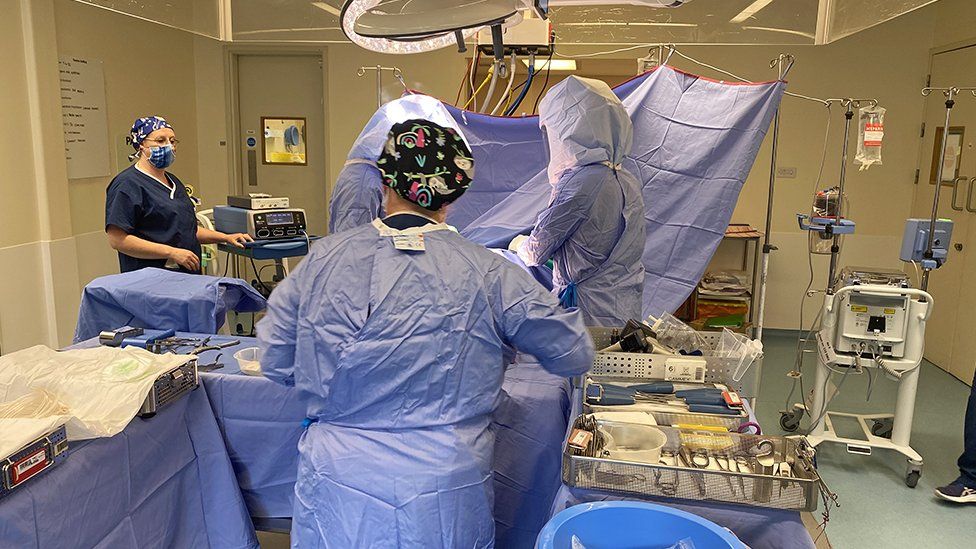
However, because most hospitals no longer have on-site laundry facilities due to outsourcing, switching from disposable to reusable items is not a straightforward fix for them.
Therefore, despite the enthusiastic interest Dr. Dawson has received from 150 trusts, he is working to construct the company's own decontamination units and laundries that are on or near healthcare sites.
In April, one such facility is set to open in Cornwall. To date, the company has sold goods worth more than £300,000. As well as using Revolution-ZERO's products for their operations in Mozambique and Kyrgyzstan, the international medical aid organization Médecins Sans Frontières will soon do so.
However, what can hospitals do with their used PPE waste? that's where Welsh company Thermal Compaction Group comes in.
Its equipment, which is roughly the size of a US fridge-freezer, melts used PPE made of plastic at temperatures higher than 300C. Following that, the plastic is compressed and cooled to form solid blocks.

Then, hospitals can sell these blocks to businesses that will turn them into new plastic buckets and other items.
Mostly in the UK, but also in Australia and the Netherlands, the company has sold more than 100 units. Additionally, a deal to adapt its units for use on warships is about to be signed with the US Navy.
The processing units are purchased by some clients while rented by others. Depending on the volume and equipment required, an average hospital may pay anywhere from £1,000 per month to £2,500.
Avoiding its use altogether is another tactic for reducing the amount of PPE waste.
In the wake of the pandemic, it is unusual to see a healthcare worker without gloves, but studies show that frequently using non-sterile gloves can promote poor hand hygiene and even accelerate the spread of preventable infections.
This occurs as a result of people forgetting to change them at crucial points in a shift, like switching from using a computer to examining a patient.
Universities Hospitals Sussex and London's Great Ormond Street, among others, are continuing their "gloves off" initiative to try and reduce use and promote handwashing in its place.
According to Paul Chivers, head of PPE innovation and sustainability at NHS Supply Chain, "we could significantly reduce inappropriate use of gloves with more education about when you don't need them.".
According to Mr. Chivers, reducing the amount of time employees wear gloves could save NHS England £48 million in procurement costs or 9 point 5 tonnes of waste. He explains that employees should only wear them when in contact with bodily fluids or highly infectious patients.
Prof. Elkington, who is now in Southampton, doubts that the UK is significantly better prepared for the upcoming pandemic.
He says, pointing to the current funding crisis crippling the NHS, "My concern is that the painful lessons of the early pandemic have been completely forgotten.".
"Someone, somewhere, ought to be stating that we must take these lessons [from the pandemic] into account; we require a plan, a government-driven strategy. " .
He continues by saying that the majority of his hospital staff members are keeping their personal respirators on standby in their offices in the interim. We have 5,000 people ready in this hospital, so at least we're prepared for the next one.
. "