
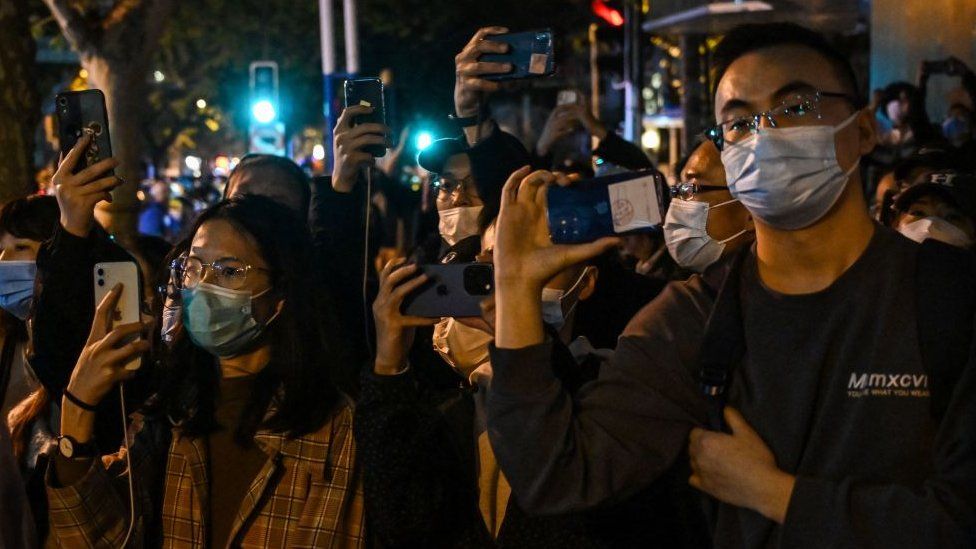
In an effort to strengthen its censorship apparatus, China wants to restrict the use of mobile file-sharing apps like AirDrop and Bluetooth.
A month-long public consultation on the proposals was started by the national internet regulator on Tuesday.
They demand, among other things, that service providers stop the spread of "unwanted" and illegal information.
The fear among activists is that this will make it harder for them to organize people or spread information.
In China, where the 'Great Firewall' has created one of the most tightly regulated internet regimes, Bluetooth, AirDrop, and similar file-sharing services are essential tools.
Anti-government protesters have frequently used AirDrop to organize and communicate their political demands in recent years. For instance, some activists used this tool to distribute anti-Xi Jinping flyers on the Shanghai subway system in October, as the Chinese president was about to begin an historic third term as head of state.
Because it uses Bluetooth connections between nearby devices and allows users to share information without disclosing their personal information or doing so through a centralized network that can be watched, AirDrop is particularly well-liked by activists.
But soon after Mr. Xi was elected to a third term, Apple changed the feature and made it available only in China. Chinese users of iPhones and other Apple devices are now only allowed to receive files from people who are listed as contacts within a 10-minute window. User-received files can only come from contacts after 10 minutes. Apple did not elaborate on why the update was initially made available in China, but over the years, the tech giant has come under fire for caving to Beijing.
Although China has defended these regulations in the name of national security and the general good, activists claim that the most recent action suppresses the few remaining file-sharing tools at their disposal.
Users must "prevent and resist the production, copying, and distribution of undesirable information," according to proposals made public by the Chinese Cyberspace Administration on Tuesday. According to the proposed regulations, those who disobey must be reported to the authorities.
These file-sharing services require users to sign up using their real names, and by default, the service must be disabled.
Human rights activist Lin Shengliang, who is based in the Netherlands, claims that the government is desperate to close Internet loopholes in order to silence dissenting voices. She adds that additional regulations of this type may follow.
After being briefly detained in Shenzhen for printing T-shirts with a quote from an activist and businessman for China's exile, Mr. Lin left the country.
He quotes George Orwell's novel 1984 as a warning against totalitarianism, saying, "This is China moving towards 1984.".
A software engineer who wished to remain anonymous said that in order to continue doing business in China, phone and app developers would have to abide by the new regulations or risk being removed from app stores.
"Like WeChat, developers will be required to offer censorship features and be liable for takedown orders. For non-Chinese applications, these new regulations might be a deal-breaker, the man said.
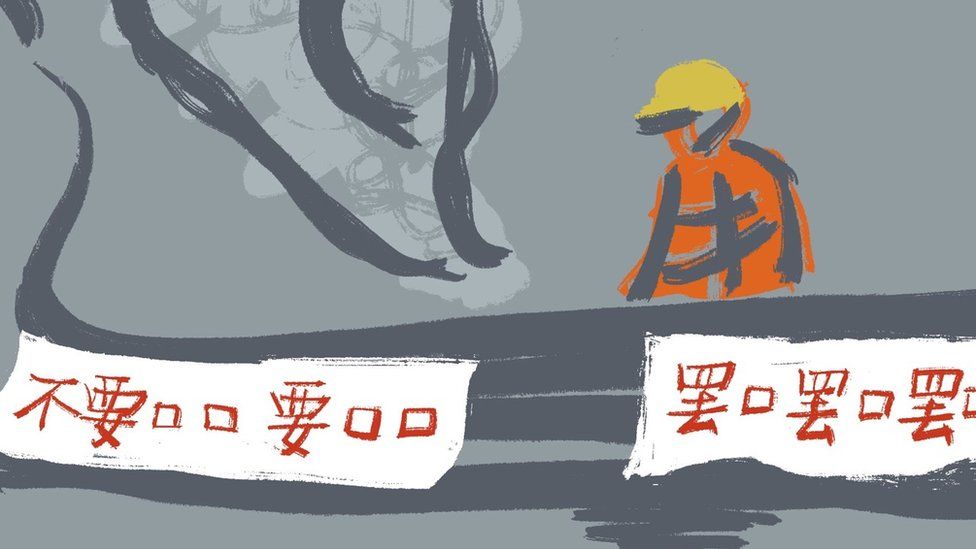
The new rules limit exactly the functions of file-sharing that activists find useful, like the ability to send content to strangers without having to wait for them to accept it or for them to give permission to pair devices.
In accordance with the rules, users can "black list" specific contacts to prevent them from sharing files with certain devices. Additionally, there is a complaint-registration option for users.
Online images, videos, and comments are already relentlessly scrubbed by censors while a growing list of words is kept off-limits. Innovative activists have been coming up with new ways to avoid this, but even those few gaps in the Great Firewall, like AirDrop, are now gradually being filled.
Users might still be able to get around these restrictions by using virtual private networks, or VPNs, but activists worry that the number would be too small to have much of an impact.
But Mr. Lin thinks that the recent wave of protests in China—which were brought on by zero-Covid policies—mark a new political awakening that won't go away so easily.
We'll find fresh ways to speak out, he promised. "If we are courageous and stand as a group, we will not be silenced.
. "