
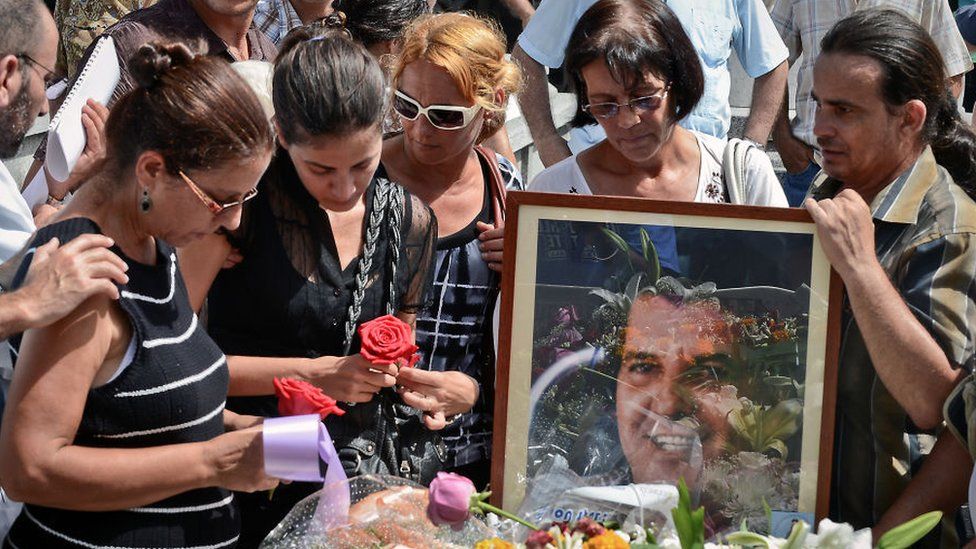
Rosa Mara Payá claims that the family has been fighting for more than ten years to have my father's true circumstances acknowledged.
Ms. Payá, 34, was never in any doubt that the 2012 car accident that claimed the lives of activist Harold Cepero and Cuban dissident Oswaldo Payá was not an accident.
She told the BBC that "the Cuban regime killed my father and Harold Cepero" following the publication this week of a new report by the top regional human rights organization for the Americas that claims Cuban state agents "participated" in their demise.
One of Cuba's most prominent pro-democracy activists, Oswaldo Payá spent decades fighting for human rights and democracy on the communist-run island, where political opposition is outlawed by law and actively targeted for repression.
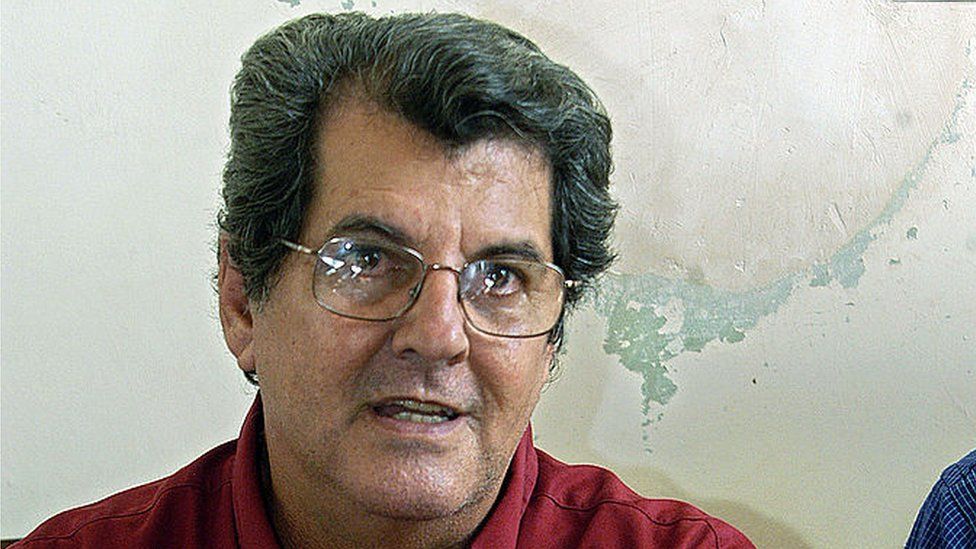
Oswaldo Payá was described by state media as a "well-known counterrevolutionary leader" who was allegedly supported by the CIA. Cuban authorities have long maintained that his death was an accident. His daughter has also been called a "liar" by state media commentators.
Oswaldo Payá established the Christian Liberation Movement in 1988, which grew to become one of Cuba's biggest opposition organizations.
In accordance with Cuba's constitution, he also started the Varela Project, a campaign to collect the 10,000 signatures required to petition the National Assembly for a referendum.
From the bottom up, he intended to enact change in Cuba, which had been governed by Fidel Castro since 1959.
Cubans would have been asked in the referendum if they supported amendments to the law ensuring freedom of expression and association, free and fair elections, and an amnesty for political prisoners.
Payá and his fellow activists knocked on doors to solicit donations, and in May 2002, they brought cardboard boxes to the National Assembly with 11,020 Cubans' signatures on them.
The Varela Project had, however, not yet gained much notoriety despite having achieved its goal.
The petition was ignored by Cuba's tightly regulated state media, which is why many Cubans were unaware of it.
That changed when Fidel Castro himself heard former US President Jimmy Carter praise the Varela Project in a speech he delivered in Spanish at the University of Havana a few days later.
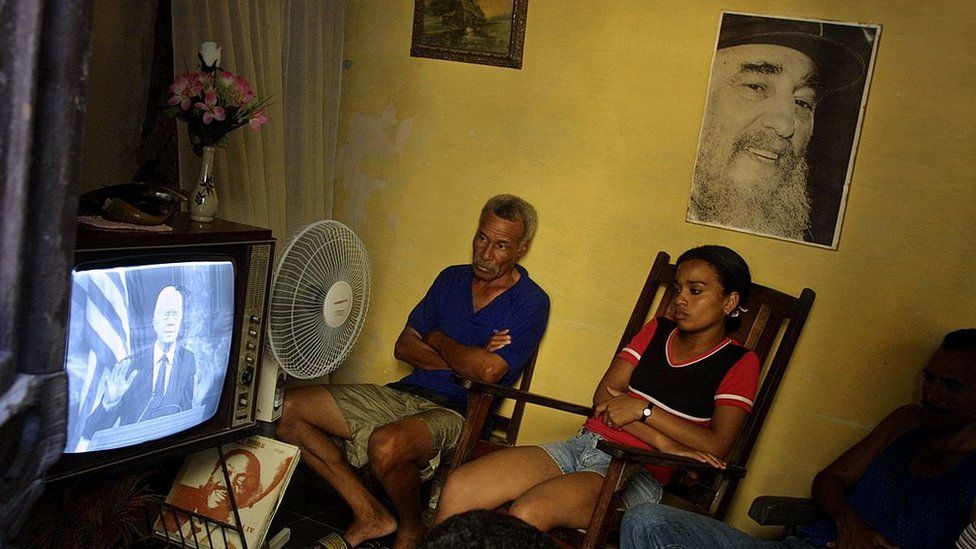
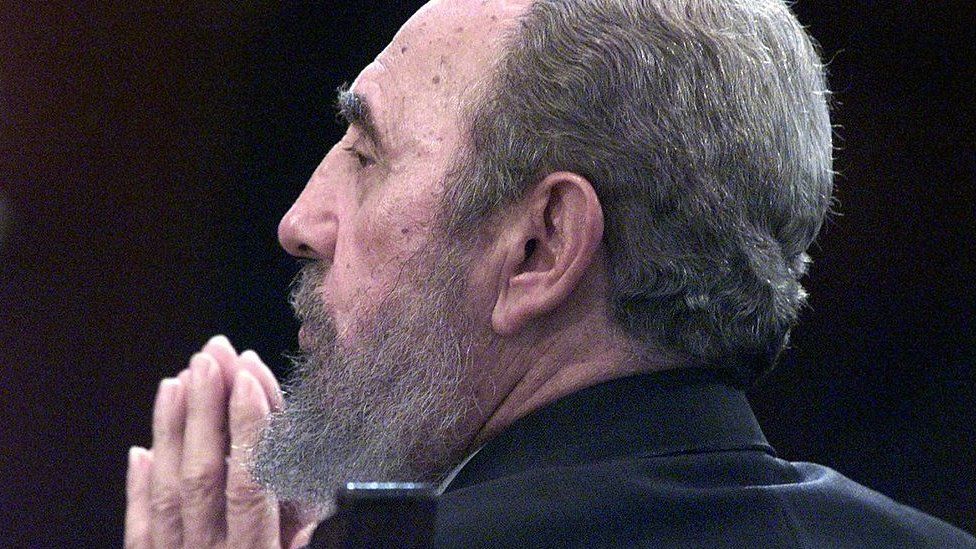
Oswaldo Payá and those who supported the project as a result were propelled to the forefront of the Castro regime's opposition.
While the National Assembly did not formally respond to the petition, Cuban officials retaliated, charging that the Varela Project was "financed, encouraged, and directed by foreign interests.".
A month later, organizations with ties to the government demanded their own referendum be held to approve an amendment that would have protected Cuba's socialist system.
In what many saw as an effort to counter Payá's calls for greater democracy, Fidel Castro led a march through the streets of Havana of hundreds of thousands of Cubans in support of the amendment.
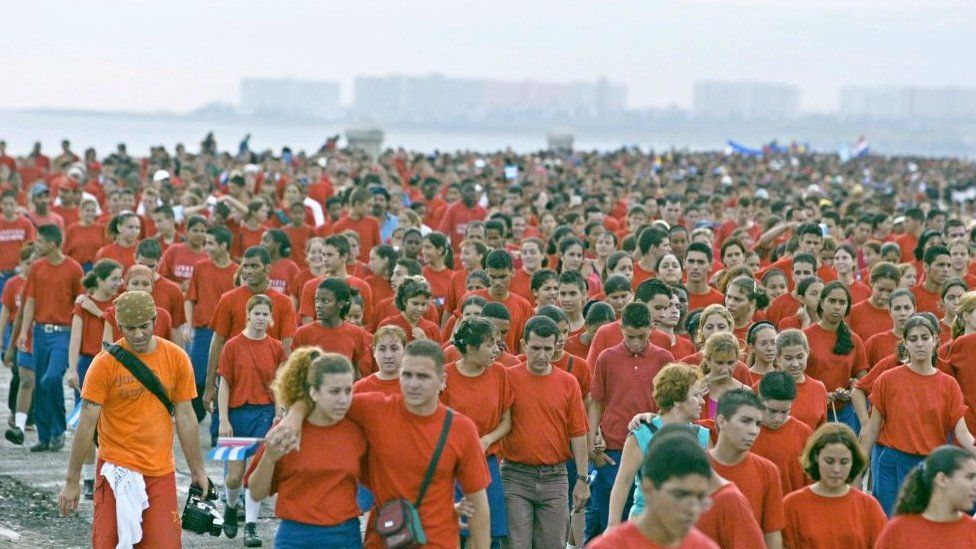
The government hailed the amendment's support from 99 percent of Cuban voters as proof of the Cuban revolution's invincibility, but critics claimed it was proof that most Cubans were too afraid to vote against the government.
Many of the Varela Project's supporters were put behind bars a year later. Oswaldo Payá was not one of them, but he complained about being constantly watched and harassed by Cuban authorities.
A report by the Inter-American Commission on Human Rights (IACHR) details the scope of these actions taken against Payá and his family.
According to the report, Cuban authorities "chased him through the streets in different cars, followed him to church and to work, and agents were stationed at his door.".
Oswaldo Payá continued his campaign for democracy unfazed by these retaliations.
On July 22, 2012, he was traveling through eastern Cuba in a car with Harold Cepero, another member of the Varela Project, and two young European politicians, a Spaniard and a Swede.

Rosa Mara, his daughter, had just turned 23 years old. She recalls how members of the Varela Project's European support network called her mother and her to let them know they were receiving unsettling messages from the two Europeans. "They reported to us that something had occurred. ".
Until a forensic doctor finally answered, Ms. Payá recalls, "I frantically called my dad's phone and no one answered.".
"When I yelled at her asking for the owner of the phone, she initially acted bewildered before finally telling me that there had been a fatality and hanging up. ".
In the backseat of the vehicle, Oswaldo Payá and Harold Cepero were both passengers who perished in the collision.
The driver, a 26-year-old Spaniard named ngel Carromero, and a young politician from Sweden named Aron Modig were both taken to a hospital in the nearby city of Bayamo with only minor wounds.
The two survivors reportedly told friends shortly after the collision that they had been forced off the road by another vehicle that had struck them from behind.
According to Rosa Mara Payá, her family knew right away that the crash had not been an accident.
They had suspicions due to Oswaldo Payá's survival of a comparable incident less than a month earlier.
When they were struck from behind by another vehicle in Cuba's capital city of Havana, Oswaldo Payá and his wife Ofelia Aceveda's Volkswagen van was so violently knocked over that it ended up in the opposing lane.
According to Rosa Mara Payá, who spoke to the BBC, she was fortunate not to have lost both of her parents on that fateful day in June.

The IACHR report, which has been in the works for ten years, states that what transpired after the collision that killed Payá and Cepero was incredibly irregular.
In a statement to the IACHR, Mr. Carromero claimed that while being held by Cuban authorities, he was "drogged, beaten, and forced to make a false confession by Cuban authorities that he was at fault for the accident." The hospital where the survivors were taken was surrounded by soldiers.
The digital recreation of the accident's alleged course that the interior ministry of Cuba produced and distributed to state-run media.
On a section of road that was being repaired, was covered in gravel, and was therefore "very slippery," it was claimed that the car had veered off the road and struck a tree. The car had been traveling "at excessive speed," according to three witnesses who were quoted in the article.

Robert F. Kennedy Center for Justice's Angelita Baeyens. Kennedy Human Rights, which represented the families of the victims in front of the IACHR, claims she is certain of the reason why the Cuban government "pushed the narrative of the accident.".
The lead attorney in the case, Ms. Baeyens, told the BBC that although they wanted to kill Payá in a way that would have been too obvious that the state was responsible, they were unable to do so.
Cuban officials' handling of the incident investigation was rife with errors, according to the IACHR. According to the report, there was an eyewitness who corroborated Mr. Carromero's claim that his car had been struck from behind by a government vehicle, but neither the police nor the witness were called to testify at Mr. Carromero's trial in Cuba.
In October 2012, Mr. Carromero was found responsible for a fatality and received a four-year prison term.
According to the IACHR's report, he was "subjected to an unlawful, arbitrary arrest, threatened by state authorities to coerce him into confessing his alleged involvement in the crash, and subjected to torture and other forms of inhumane treatment.".
He was moved to Spain in December 2012 so that he could finish his sentence there.
He claimed that he continued to receive threats even after arriving in Spain.
He told the BBC from Madrid that he had received anonymous death threats telling him to keep quiet.
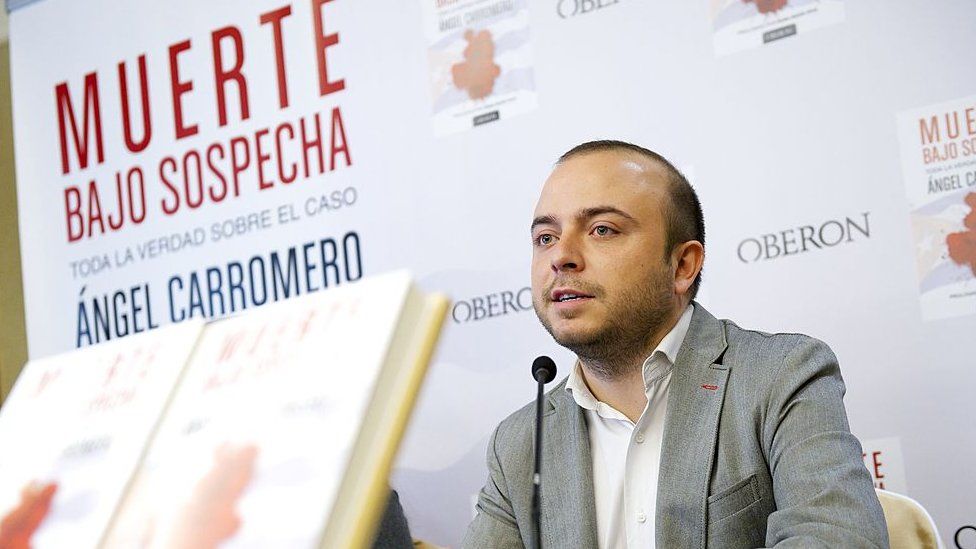
"Coming late, but providing the recognition, so important for the family of Oswaldo [Payá] and Harold [Cepero] and for myself, that what we had been saying all along was true," Mr. Carromero said of the IACHR report, which found "serious and sufficient evidence to conclude that state agents participated in the death of Mr. Payá and Mr. Cepero.".
This report demonstrates that the truth—not just our truth—was what was being said. ".
The BBC requested a response from the Cuban government regarding the report, but has not yet heard back.

Cuba did not provide any supporting documentation to the IACHR in this case. It has previously called regional organizations like the IACHR "a structure designed by the US to control Latin America" and criticized them.
Rosa Mara Payá declares that she does not anticipate the Cuban government to respond in any way to the report, which she hails as "historic" and "a huge relief.".
She is adamant that the Cuban government "assassinated" her father and that justice in Cuba won't come until there is freedom and democracy—the very things that her father and Harold Cepero, she claims, fought for.