
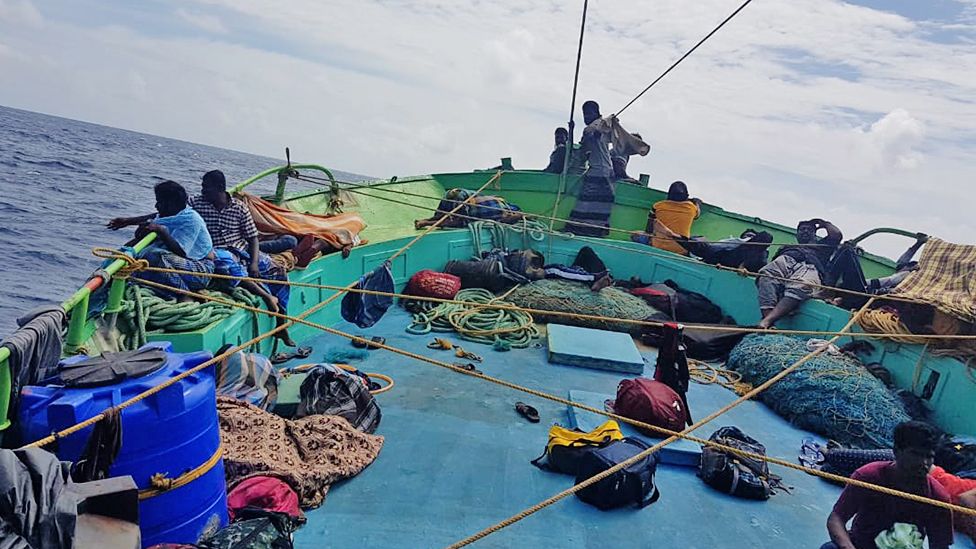
Following their rescue from a sinking fishing boat, dozens of migrants have been left stranded on a small British territory in the Indian Ocean for months. They describe the conditions as hellish and are desperate to flee for safety, but they feel scared and powerless because of the island's peculiar legal status.
All of the migrants' names have been changed.
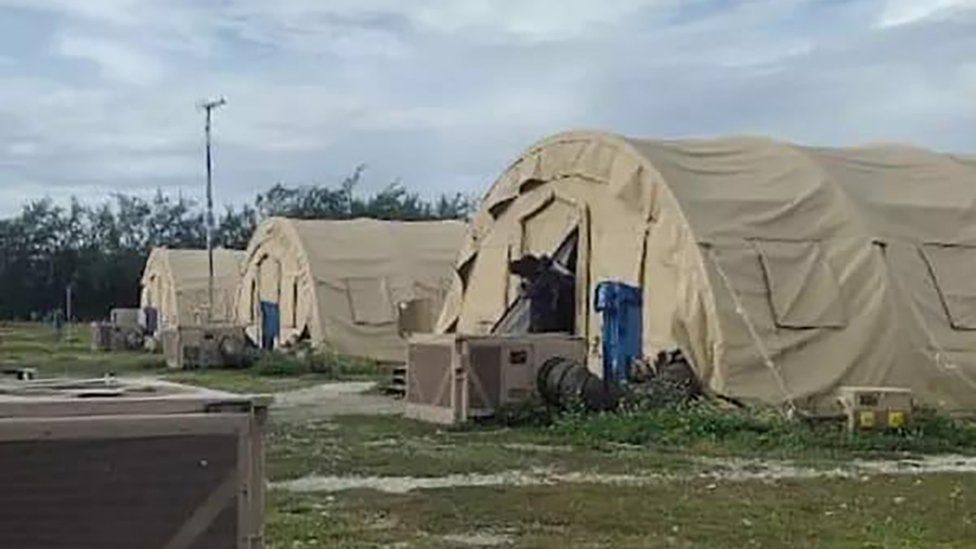
A 50ft (15m) fishing boat named the Marayan was spotted in distress near the island of Diego Garcia in the early hours of October 3, 2021. The secretive UK-US military base that is located there, hundreds of miles from any other populated area, and where uninvited visitors are prohibited, immediately caught the attention of the island's authorities.
It quickly became apparent that the 89 passengers, all of whom were Sri Lankan Tamils who claimed to be fleeing persecution, had no intention of landing on the island. Prior to being diverted by inclement weather and engine issues, they had intended to seek asylum in Canada, a claim supported by maps, diaries, and GPS data from the ship.
One of the men on board claimed that as soon as the boat ran into trouble, they began searching for the closest place to shelter. We began sailing in the direction of Diego Garcia after spotting some light, he told the BBC.
The Marayan was accompanied by a Royal Navy ship as it landed, and the passengers were then placed in temporary quarters.
It's been 20 months since then. Additionally, information exchanged between London and island officials sheds light on the persistence of the migrants, some of whom have since made suicide attempts as a result of their precarious circumstances.
Officials are shown wrangling with what to do about the "unprecedented development" in the communications that immediately followed their arrival, which were obtained through a Freedom of Information request to the Foreign Office by a lawyer for some of the migrants and shared with the BBC.

The group had stated in earlier messages that it intended to "investigate repair options to the engine," but added that "we can't rule out" the possibility that they would attempt to submit asylum applications from Diego Garcia.
That situation had materialized by the following day.
Following their departure from Tamil Nadu in India 18 days prior, the Tamils had given the commander of the British forces on the island a letter stating their desire to be sent to a safe country as they were fleeing persecution. Since then, a lot of people have asserted that they have connections to the former Tamil Tiger rebels in Sri Lanka, who were routed in the civil war that ended in 2009, and claim that they have been persecuted as a result. Some claim to have experienced sexual assault or torture.
The group's "unexpected arrival" marked the first time asylum was requested on British Indian Ocean Territory (BIOT), the official name for the islands, according to an official "information note" approved in London by the director of overseas territories, Paul Candler. It also stated that, in the event that the media contacted the UK government, the official "defensive line" would be that it was "aware of the incident" and that it was "working urgently to resolve the situation.".
The statement continued, "[t]he group currently have no means of communication with the outside world... [but] with time passing there is a high likelihood news will spread.".
More boats began to arrive on Diego Garcia in the ensuing months as correspondence with London increased. As more people arrived on the island from Sri Lanka, the number of people in the camp at one point increased to at least 150, according to lawyers.
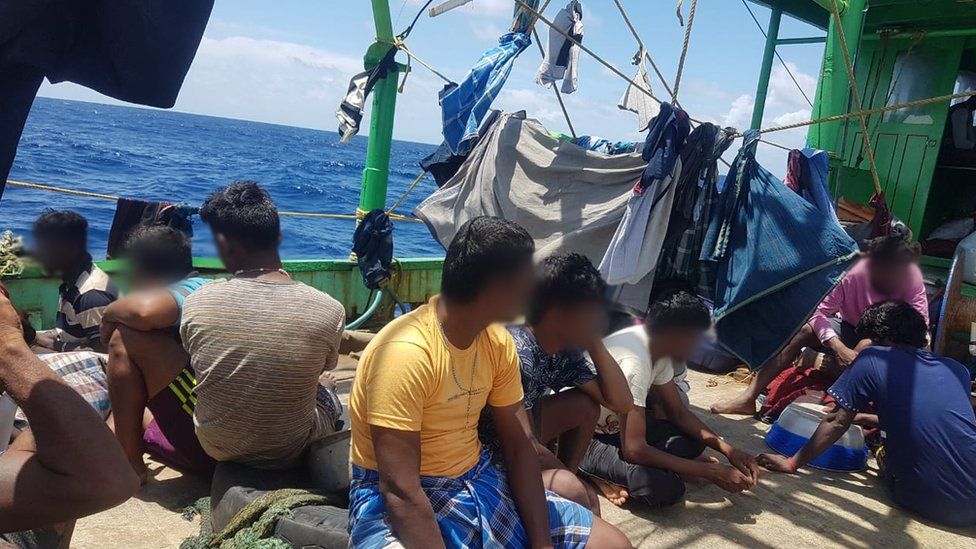
Meanwhile, the asylum seekers were starting to realize the reality of their predicament.
According to Lakshani, one of the migrants, "I was initially happy, thinking: 'I survived, I am getting food, and I am away from torture,'" she told the BBC last month.
But she claimed that the haven on the tropical island "quickly turned out to be a hell.".
She claims a man who traveled in the same boat and stayed in the same tent as her assaulted her sexually in October of last year.
I began to scream, but no one responded, she said.
She claims that when she was finally able to file a formal complaint, the investigator informed her that it was challenging to collect evidence because she had just washed her clothes. She claims that for nearly a week after she first demanded that her alleged attacker be moved, she was forced to remain in the same tent as him.
Requests for comment regarding this claim from the UK government and BIOT administration were not met with a response.
Lakshani and other people told the BBC that they or people they knew had tried to commit suicide or had hurt themselves out of desperation due to the oppressive conditions, including by ingesting sharp objects.
In the camp, there have allegedly been at least two sexual assaults and at least 12 suicide attempts, according to attorneys.
"We are physically and mentally worn out... We are leading lifeless lives. Vithusan, another immigrant, said, "I feel like I'm living like a dead man. He confessed to twice harming himself to the BBC.
Another man, Aadhavan, claimed that he "lost all hope" and decided to commit suicide after his initial request for protection was denied.
He remarked, "I didn't want to live here like a caged animal forever.
He revealed his suicide attempt to another immigrant in the camp, and she informed the camp authorities, who then made arrangements for medical care.
Lakshani claimed that an officer at the camp told her she would be sent back to Sri Lanka, where she claims she was raped and tortured by soldiers in 2021, provoking her own attempt at suicide. Shanthi, another woman, claimed that her husband had also made suicide attempts.
Requests for comment on this specific claim from the UK government and G4S, the private security firm hired to protect the migrant camp, went unanswered.
The "welfare and safety" of migrants on BIOT were described as "paramount" and "all allegations of mistreatment are taken seriously and fully investigated," according to a UK government spokesperson. G4S claimed that its employees treated migrants on the island with "dignity and respect at all times.".
According to the spokesperson, the BIOT administration was offering "extensive medical support.".
On the island, there have allegedly been child participants in hunger strikes as well.
Lawyers claim that after one earlier this year, the BIOT commissioner took away migrants' phones, prohibited use of the communal phone, and stopped providing medical care "until the individuals were willing to sign a form disclaiming certain liabilities of the BIOT administration.".
The BIOT leadership has denied this claim in court documents, claiming that after one hunger strike, sharp objects were taken out of the camp and other precautions were taken to prevent self-harm.
We can all agree that the military installation on Diego Garcia was not built with the purpose of housing asylum seekers.
In 1965, when Britain seized control of the Chagos Islands—of which Diego Garcia is a part—from its former colony Mauritius, it also ordered the expulsion of more than 1,000 residents to make room for the base.
The base has reportedly been used as a so-called CIA "black site," a location used to house and question terror suspects. In recent decades, US planes have been dispatched from the base to bomb Afghanistan and Iraq.
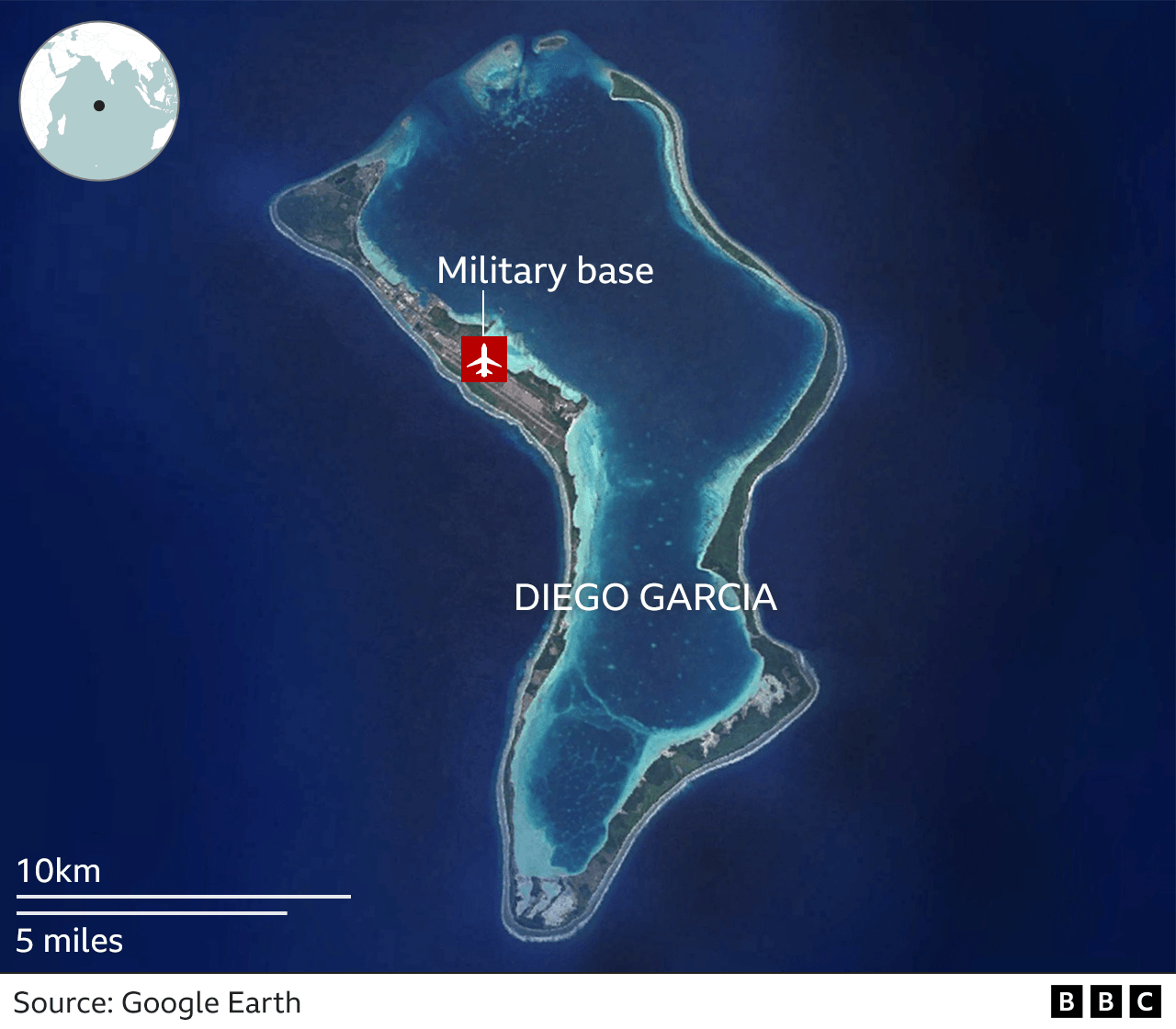
Tents that were once used as Covid isolation facilities for military personnel, according to court documents filed in London, are now being used as a makeshift migrant camp. The camp is surrounded by fences, and inside are some basic medical facilities as well as a canteen. If the migrants leave the area, G4S security guards must go with them.
Shanthi described the lack of freedom as "being like parrots in a cage.".
Basic education was made available, according to the migrants' attorneys, about a year ago, but classes occasionally had to be held outside due to a rat problem.
After abandoning their claim or having it denied, some migrants have since returned home. Others sailed for the French overseas territory of Reunion in the Indian Ocean in an effort to seek asylum there, according to the attorneys.
There are still at least 60 Tamil people living on the island. They are awaiting decisions regarding their future or contesting previous judgments in complex legal proceedings taking place thousands of miles away in the UK.
Despite the UK's adherence to international refugee law, court documents state that BIOT is "constitutionally distinct and separate from the UK" and is not covered by this law. A separate process, based on the idea that no-one should be returned to a country where they face torture or inhumane treatment, has been established to determine if they should be sent back to Sri Lanka or to a "safe third country".
Tessa Gregory, an attorney, claims that the London firm she works for, Leigh Day, has filed a judicial review on behalf of several asylum seekers on Diego Garcia, challenging the "lawfulness" of this procedure, which she calls "fundamentally unfair.".

She claims that decisions to send back some migrants to Sri Lanka were made on the basis of hasty initial interviews, and that later, more thorough interviews were tainted by translation errors. Because the UK government has not yet determined a suitable safe third country, she claimed that some people have been left "in limbo."
Meanwhile, the UK government said the BIOT administration was "considering migrants' protection claims under BIOT law and in line with international legal obligations".
The UK office of the United Nations refugee agency (UNHCR) told the BBC it was concerned by reports of the "deteriorating health situation" on Diego Garcia and had requested access from UK authorities, but this had not yet been granted.
Emilie McDonnell, UK advocacy and communications co-ordinator at Human Rights Watch, said the British government "should consider any and all options to ensure the welfare of these asylum seekers who are on British-controlled territory and therefore should be protected by the British government".
The UK has said it will not take in any of the Diego Garcia asylum seekers whose claims are approved, according to lawyers.
Three of the Tamils who arrived on Diego Garcia are currently in Rwanda receiving medical treatment after being evacuated from the island following self-harm and suicide attempts. Their transfer is not part of the deal struck by the British and Rwandan governments to send some asylum seekers from the UK to the east African country.
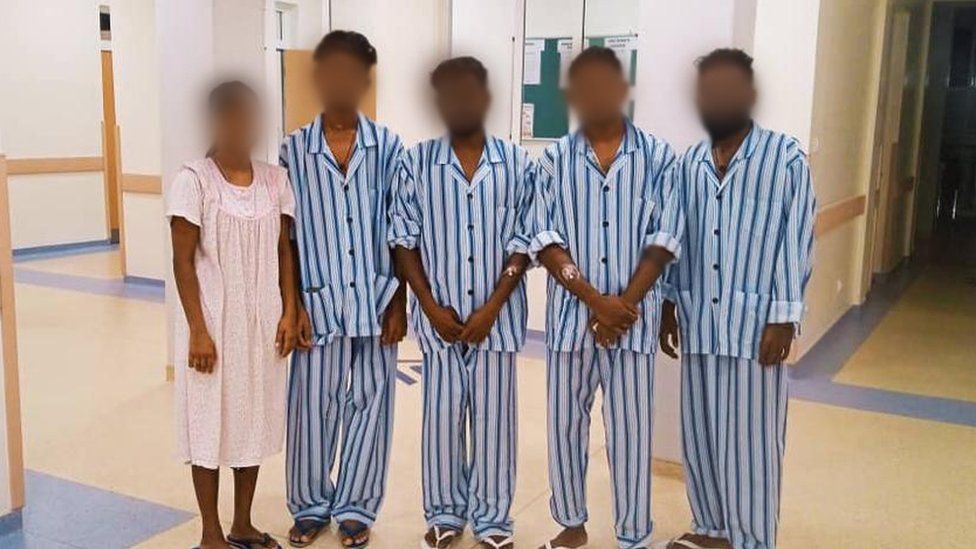
In a letter sent to one of them in May, and seen by the BBC, the BIOT administration said it would find and pay for private accommodation while they received treatment in Rwanda - including therapy.
"If you are not content with the proposal… we can arrange for your return to Diego Garcia. There is no other option available at this time," it said.
Four of the asylum seekers have had their claims to be sent to a "safe third country" approved. A letter sent two months ago to one of them, seen by the BBC, said "every effort will be made to do this expeditiously".
In a separate statement to the BBC this week, the UK government said it was "working tirelessly with the BIOT administration to find a long-term solution to [the migrants'] current situation. ".
But the situation for everyone could continue to drag on with no clear timeframe for finding a safe third country, and long legal processes for those disputing rejections.
After 20 months of waiting, one asylum seeker said everyone seemed to have "lost their hope".