
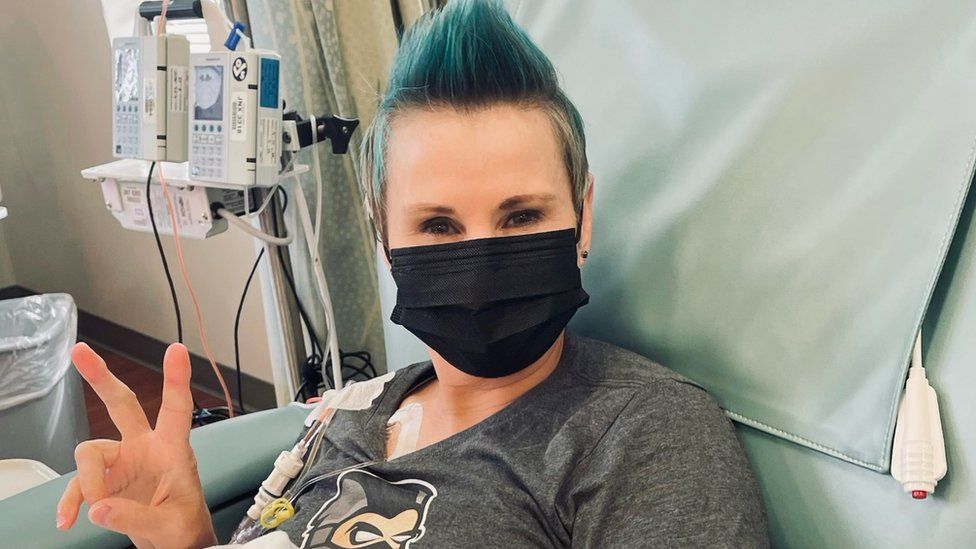
A stage 4 ovarian cancer recurrence is being fought by Toni Dezomits, a 55-year-old retired police officer. When her doctor gave her more bad news, she had already undergone several rounds of chemotherapy. .
Last month, Ms. Dezomits was informed that one of the three medications she was supposed to receive—carboplatin—was unavailable nationwide the day before she began her third round of treatment.
The North Carolina native is completing her final three chemotherapy sessions with only two of the advised medications after being forced to decide between forgoing the medication or switching it for one with more severe side effects.
You have these two poor options, she said. "I'm concerned because I know the drug I'm not receiving is the one my cancer responded to very well [the first time]," the patient said. ".
According to experts, there is currently one of the worst chemo drug shortages the US has seen in the last three decades.
Dr. Julie Gralow, the chief medical officer at the American Society of Clinical Oncology, estimates that as many as 100,000 patients may have been impacted over the past few months. Ms. Dezomits is one of them.
Over 130 medications, including 14 cancer treatments, were in short supply as of this week, according to the US Food and Drug Administration (FDA).
The shortages this time have severely impacted two front-line therapies, carboplatin and cisplatin, which are used to treat a variety of cancers, including head and neck, gynecologic, and gastrointestinal cancers. Experts say a wide range of factors have contributed to the shortages.
The most recent shortage occurred as a result of an Indian plant closing over concerns over quality that supplied raw materials for all US manufacturers using cisplatin. As a result, Dr. Gralow noted that demand for the drug carboplatin increased.
As a result, some cancer treatment centers have been forced to increase the time between patient chemotherapy sessions, and some patients have been required to travel long distances for treatment.
When her neighborhood oncologist was unable to get her carboplatin, Ms. Dezomits tried a bigger cancer center in Texas where she had previously been. However, they informed her that due to a higher priority for treating patients with better prognoses, they were unable to administer the medication to her.
Ms. Dezomits, a soldier in the Persian Gulf war, compared it to triage on the battlefield. This nation ought to be a bit better than that. Life-saving medications should be available to us for about $9 or $10 per dose. ".
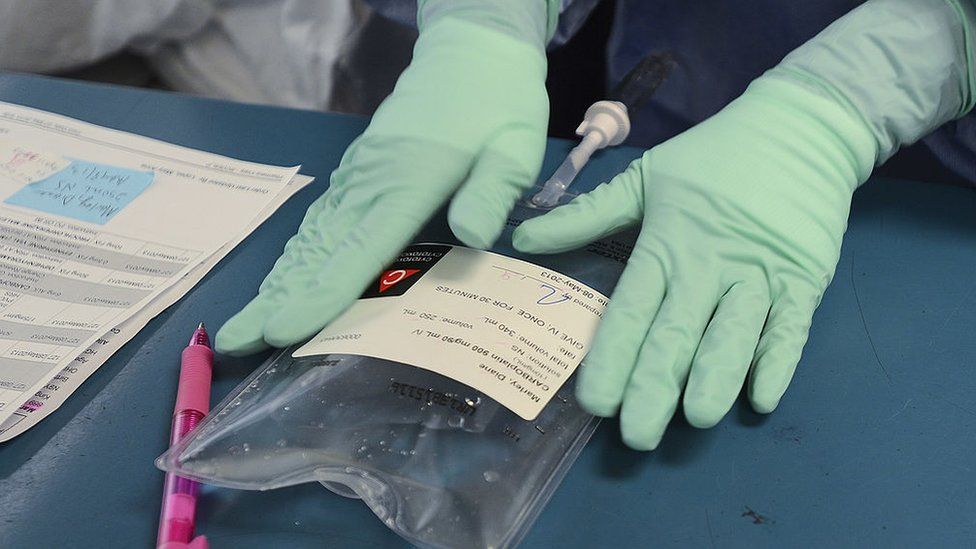
According to experts, the persistent shortages of chemotherapy drugs have been caused by the low cost of generic first-line cancer medications. According to Dr. Karen Knudsen, CEO of the American Cancer Society, although the drugs are inexpensive to produce, pharmaceutical companies are not encouraged to do so because they don't generate significant profits.
As US life expectancy has increased and more people are developing cancer, the problem of the drug shortage has gotten worse as well.
This week, the FDA started working with a Chinese manufacturer to import one of the chemotherapy medications in an effort to relieve the supply chain constraints.
Dr. Knudsen predicted that while the action will likely help alleviate some short-term supply issues in the upcoming months, it will not significantly address the more cyclical issue of chemotherapy drug shortages.
We are in a situation where a more long-lasting solution is required, she said, adding that an emergency solution is currently being implemented.
According to medical professionals, the US government should collaborate with the private sector to develop more long-term solutions.
According to Dr. Gralow, the US government could use its drug purchasing funds to stockpile critical medications in national strategic reserves and encourage more high-caliber pharmaceutical firms to produce them.
Patient Ms. Dezomits worries that people in the US may continue to face difficulties locating the cancer care they require in the absence of more action.
She claimed that dealing with cancer and one's own mortality was already stressful enough. "Patients now have yet another challenge to consider as a result of this.
. "