

In a new docuseries about Bollywood's "B movies," director Dilip Gulati explains why he makes the movies he does by saying that every scene in a movie should touch you either above the belt, below the belt, or both.
Indian pulp films were produced on pitiful budgets and impossibly short deadlines, and were frequently derided as Bollywood's crude cousins. They featured thinly veiled stories, cheesy dialogue, garish aesthetics, and sex, and were directed by largely unknown actors.
When these movies were at their peak in the 1990s, tens of thousands of people flocked to see them, but by 2004, the business had dried up.
Cinema Marte Dum Tak (Movies till the end of time), a new six-part documentary series on Amazon Prime, is shedding light on these movies, their spirit and major players, and the reasons for their origins and eventual demise.
Four successful directors—Vinod Talwar, J Neelam, Kishen Shah, and Dilip Gulati—are given a shoestring budget, a short turnaround, and the assignment to make a movie in their own unique style.
After a long absence from their craft, the directors immediately get to work, enlisting the help of former coworkers and friends. The 90s are brought back to life for the audience as the show follows these directors.
Viewers get to catch glimpses of their older movies, which had corny names like Main hoon kuwanri dulhan (I'm a virgin bride), Kunwari chudail (Virgin witch), and Maut ke peeche maut (Death after death).
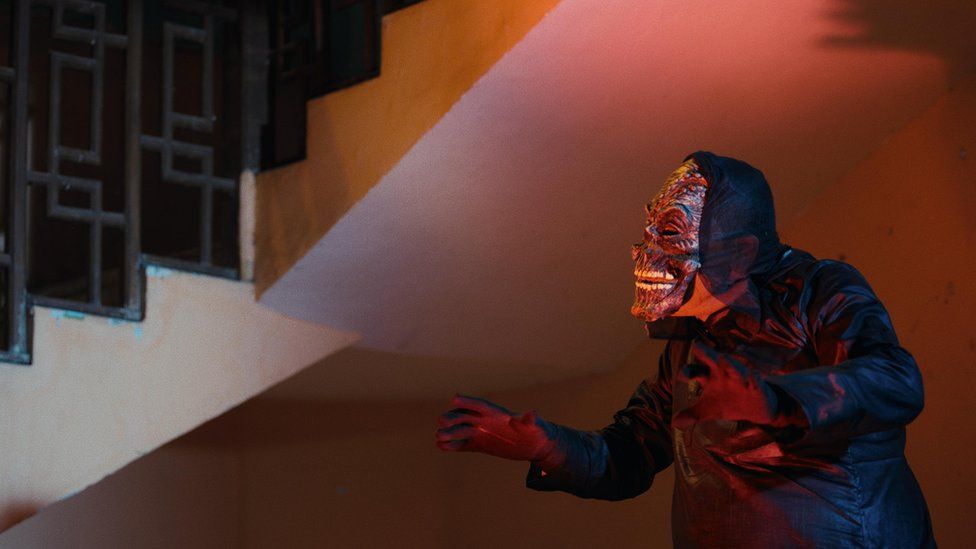
Directors for these movies would serve as art directors, costume designers, and occasionally even actors while the movies were being made on a single set. To draw in larger audiences, the movies' titles were frequently changed to raunchier ones, and the director would occasionally change the storyline.
Bollywood celebrities have occasionally been hired for a few scenes and paid in cash for each day that they were on the job. Kanti Shah, a prolific B-movie director who is featured in the series, talks about how Govinda, Mithun Chakraborty, and Dharmendra have appeared in his movies.
In these movies, nothing was too taboo, too outrageous, or too corny. Everything was standard procedure, from a dominatrix bandit enlisting male masseurs in her gang to a gender-changing ghost having sex with maids.
In the movie Khooni Dracula (Killer Dracula), a vampire strolls through a slum and engages in sexual activity with a woman who is taking a public bath, according to film scholar Aseem Chandaver.
He thinks, "In a mainstream movie, even if the ghost was having sex with people, it would be in some fancy place or, at the very least, in a bathtub. But these directors didn't hesitate to depict the realities of their audience on screen because they were aware of them.
In order to fit everyone, additional chairs had to be added to the seating capacity of the theaters showing these films. The majority of the audience consisted of members of India's working class, including taxi and tuk-tuk drivers, street vendors of food, and laborers who live in remote small towns and hold demanding jobs that frequently pay below minimum wage.

These movies provided them with a way to escape their depressing daily lives. They could lose themselves in a movie that thrilled and titillated them for a couple of hours in a dimly lit theater.
The show also portrays the prejudice and difficulties those who worked there experienced as a result of their connection to these "low-budget horror films.". Finding work in big-budget movies or landing more serious roles proved difficult for them. The censor board frequently had issues with the movies as well.
More explicit scenes started to be requested by distributors, who attributed it to audience demand. The directors, however, shot these separately and added these "bits" to the movie during the screening because the censors wouldn't let them through.
The situation reached a breaking point when a projectionist inserted a sex scene into a scene involving siblings. As a result, there was a commotion, and the police started to crack down on these movies. By 2004, the B-movie business was all but dead, robbing hundreds of people of their livelihoods.
This "golden age of B-movies" may be over, but their legacy endures thanks to fan communities, memes, spoofs, and jokes.
Their raunchy titles frequently appear in silly charade games, and they have also served as inspiration for poster art. These movies, according to film scholar Vibhushan Subba, encourage fan culture because of their "outlandish ingenuity, transgressive quality, and over-the-top aesthetics.".
According to Mr. Subba, "These movies carved out a niche—even if it was a tiny one—for themselves in popular culture."