
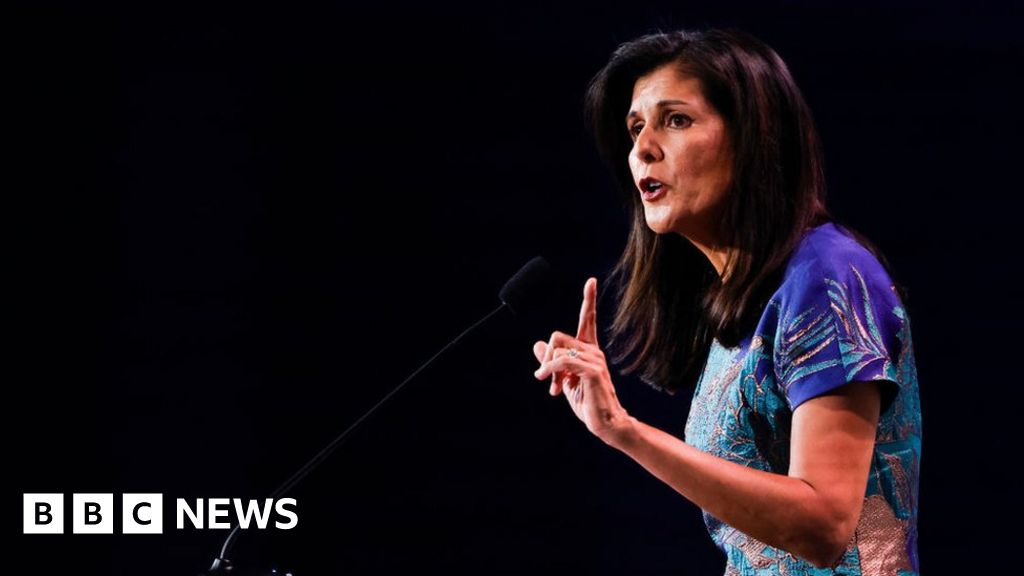
With her declaration that she will seek the Republican nomination for president in 2024, Nikki Haley becomes the first Republican to take on Donald Trump. It is the most recent first in a career marked by them, so how did she end up as a presidential candidate?
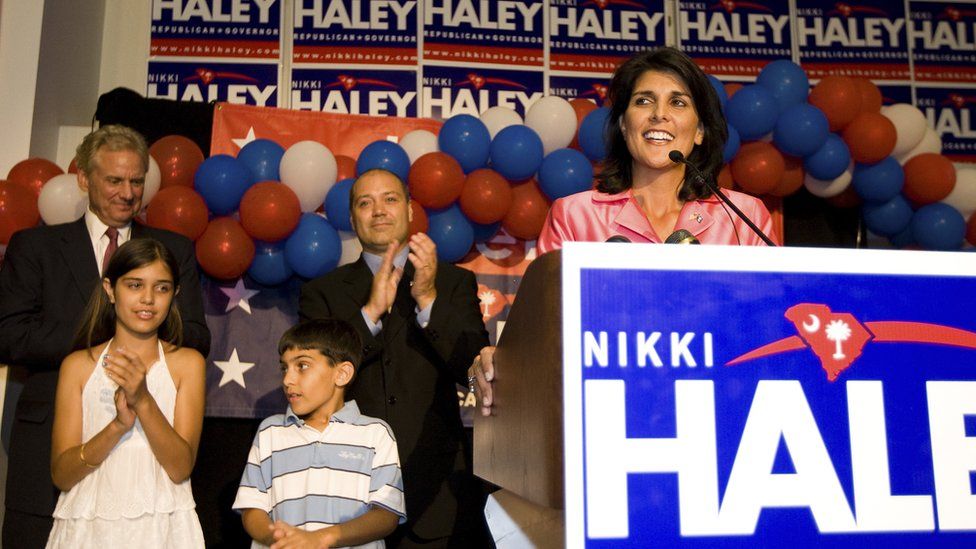
Nikki Haley first gained widespread attention when, at the age of 39, she was elected as the youngest governor of the US in 2010. She became the first female and Asian-American governor of the conservative southern state of South Carolina thanks to her victory there, making history on several fronts.
Her campaign had always been viewed as improbable. "They didn't take her seriously. There were about ten of us who believed she could win, according to a friend of hers who recently spoke to Politico magazine. But she gained momentum through grassroots campaigning and eventually received high-profile endorsements from Mitt Romney and Sarah Palin.
She was quickly hailed as a rising Republican star who could change the party's stereotypically male image after winning against an all-male field. At her victory rally, she told the crowd, "This is a great night for the thousands of people across this state who believed in this underdog campaign.".
Her positions on important issues during her two terms as governor, which she held between 2011 and 2017, are clear from her two terms in office. She gained a reputation as a leader who was moderately conservative and pro-business, concentrating on luring major corporations to South Carolina. The cost of doing business will be low if you come [here], she said at the time. "We'll have one of the lowest rates of union membership. ".
She has referred to herself as a pro-life advocate and has backed South Carolina laws that restrict access to abortion. Ms. Haley, who has since criticized President Biden's border policies, first signed a law in her first year as governor that tightened up the laws against illegal immigration. She has stated that she is an advocate for and defender of gun rights.
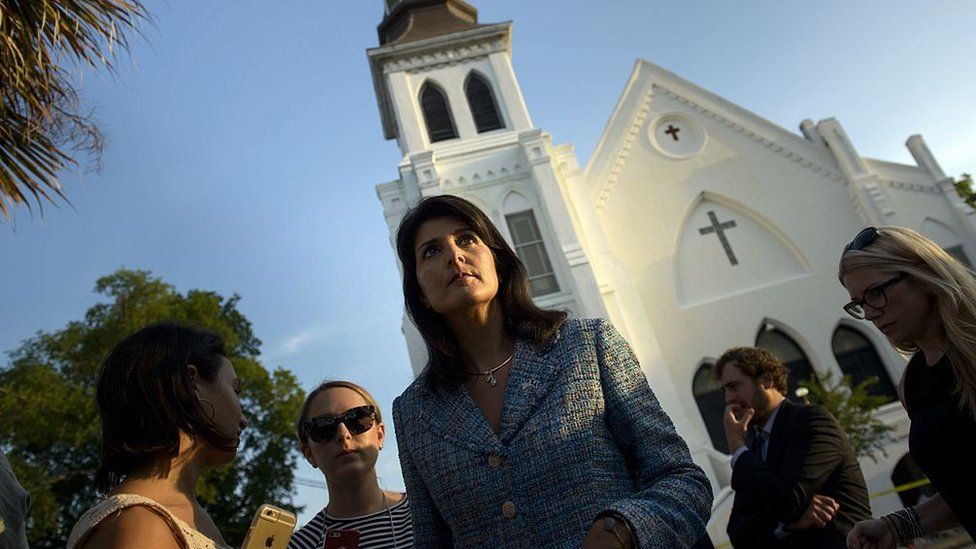
In 2015, a white supremacist entered the Mother Emanuel AME Church in Charleston and killed nine black worshipers, which may have been the turning point in her governorship and one that elevated her profile nationally.
Prosecutors claimed that the attack, which Ms. Haley later described as having "shattered my world," was committed in an effort to incite racial conflict. During the American Civil War, the Confederate flag of the slave-owning South was seen being carried by the shooter; this flag is still viewed by some as a symbol of racism. Soon, there was a backlash against the flag that was then flying over the state Capitol.
Ms. Haley had long resisted criticism of the flag but has since changed her mind. She demanded that it be taken down from state property five days after the murders, starting a process that culminated in a month when, following a tumultuous and emotional debate in the state legislature, a motion to do so was approved.
After passing legislation to have it taken down, she remarked, "There is a place for that flag.". "It's not located in an area that is representative of all South Carolinians. ".
A backlash, however, was experienced by Ms. Haley in 2019 after she claimed that the Charleston shooter had "hijacked" the Confederate flag, which she had claimed represented "service, sacrifice, and heritage.".
Additionally, she claimed that the media had attempted to control the story being told about the shooting. "They intended for this to be about racism. She claimed that they intended to make it about gun control.
J. A. Moore, a South Carolina state representative for the Democratic party whose sister died in the shooting, said at the time that Ms. Haley's "continued use of this tragedy for political reasons is disgusting.".
She subsequently stated in an essay for the Washington Post that her views on the flag had not changed, attributing the negative response to her remarks to a shift in culture. "The outrage culture of today prohibits any gestures toward the opposing side. It requires us to identify winners and losers," she wrote.
Her parents, Punjabi Sikh immigrants from India who ran a clothing store, gave birth to Nimrata Nikki Randhawa in Bamberg, South Carolina, where Mr. Haley frequently mentions her background. In a video announcing her presidential bid, she said she grew up "not Black, not White - I was different." She has claimed to have experienced racist taunts in that rural area of the state.
When I was a child, we were aliens. However, it's not unusual. In her 2019 memoir, she stated that "people who are different are outsiders everywhere in the world.
But according to what she has said, racism is not a systemic problem in the US. "That's false. She declared, "America is not a racist nation," at the 2020 Republican National Convention.
Following these remarks, some social media users criticized Ms. Haley for not using her first name, with some saying she had "white-washed" her identity. She had used her legal middle name, Nikki, however, since birth, according to a later statement from a spokesman to USA Today.
She married Michael Haley in 1996 after meeting him at Clemson University where they both studied accounting, and she also took on his last name. The couple wed in separate Methodist and Sikh ceremonies, and they have two kids.
Before assuming a number of senior positions in the private sector, Ms. Haley worked for her parents' clothing company after graduating. After winning a seat in the South Carolina legislature, she entered politics in 2004.
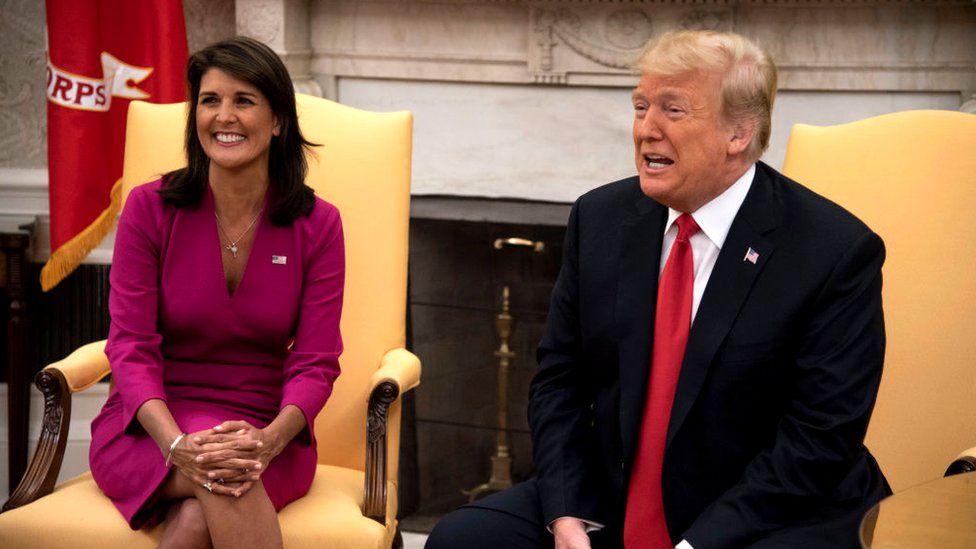
During the 2016 election, Ms. Haley expressed her disapproval of Donald Trump by supporting a number of his rivals in the primaries and declaring that she was "not a fan" of him. He represented, according to her, "everything I taught my kids not to do in kindergarten.".
However, she gave up her position as governor of South Carolina in 2017 after agreeing to accept the then-president's nomination for the position of US ambassador to the UN.
She worked there for two years and, in contrast to many of Mr. Trump's early picks, never had a public argument with him. She aggressively pushed the administration's support for Israel and stood firm against Russia and North Korea.
There were rumors that Ms. Haley would run against Mr. Trump for the 2020 presidential nomination or take Mike Pence's place as his vice president after stepping down prior to the 2018 November midterm elections. Instead, she went back to South Carolina, where she wrote two books and did speaking engagements.
After the riot on January 6, 2021, she publicly criticized Mr. Trump, saying, "We need to acknowledge he let us down," according to Politico. Additionally, she stated in a speech delivered the day following the riot that "his actions since election day will be judged harshly by history.".
Since then, her opinion of the former president has apparently changed. She promised not to challenge Mr. Trump for the presidency at one point in 2021. However, she recently reversed course, citing the need for "generational change" in an apparent dig at 76-year-old Mr. Trump.
She declared her intention to run for president by saying that "a new generation of leadership is needed to rediscover fiscal responsibility, secure our border, and strengthen our nation."