

Few of the numerous cases brought under the US Espionage Act in the more than 100 years since it was passed relate to the type of espionage that most people typically associate with it: individuals who actually spy on behalf of another country.
An emerging Republican defense of Donald Trump stems from the fact that he is the first former US president to be charged with federal crimes, including 31 Espionage Act violations, and that he should not be charged under the law because he is not a foreign spy.
Senator Lindsey Graham, a Republican from South Carolina, said: "You may hate his guts, but he is not a spy; he did not commit espionage.".
Senator Marco Rubio of Florida, a Republican, echoed that defense, claiming that Mr. Trump had not planned to compromise national security with the enemies of the United States.
No allegations have been made that he sold it to a foreign power, that it was trafficked to someone else, or that anyone gained access to it, according to Mr. Rubio.
Congress approved the Espionage Act in 1917, two months after the United States enlisted in the war.
The handling of government records "relating to the national defense" of the US is expressly prohibited by law. In recent years, it has been more frequently used to punish whistle-blowers who reveal government secrets to journalists instead of strictly punishing spies who aim to harm the US.
After his term as president came to an end on January 20, 2020, Mr. Trump was forbidden from having access to any classified materials as a private citizen, much less having them in an unauthorized location.
Although he was repeatedly asked to turn everything over to the National Archives, according to the prosecution, he kept hundreds of pages of sensitive information at two of his resorts a year later.
The provision of 18 US Code 793 (e) that the special counsel's indictment in Mr. Trump's case cites does not require the suspect to be conspiring with another nation to intentionally harm the US.
It states, among other things, that it is unlawful to have "unauthorized possession, access, or control over [information]... the possessor has reason to believe could be used to the injury of the United States or to the advantage of any foreign nation" and to "wilfully" retain it while failing "to deliver it to the officer or employee of the United States entitled to receive it.". ".
According to the law, prosecutors will not have to show that Mr. Trump knew the information he had could endanger national security interests, only that any sane person would recognize the potential harm.
Instead, they will highlight Mr. Trump's efforts to "retain" the information despite having multiple chances to turn it over to the authorities.
Furthermore, according to the law, it is not necessary to demonstrate that the documents were secret; rather, all that must be shown is that they are related to US national security or that they actually harmed US interests.
The Espionage Act was first applied to prosecute political dissidents and peace activists who opposed compulsory military service.
Since then, the Justice Department has used it to prosecute whistleblowers like Edward Snowden and Daniel Ellsberg, whose disclosure of the vast domestic surveillance program revealed in the Pentagon Papers shed light on the Vietnam War.
The founder of Wikileaks, Julian Assange, is battling extradition to the US after being accused of violating the Espionage Act. Additionally charged under the law were intelligence agents Chelsea Manning and Reality Winner.
The consequences can be severe. Due to their involvement in a Soviet spy ring in New York, Julius and Ethel Rosenberg were executed in 1953 for breaking the law.
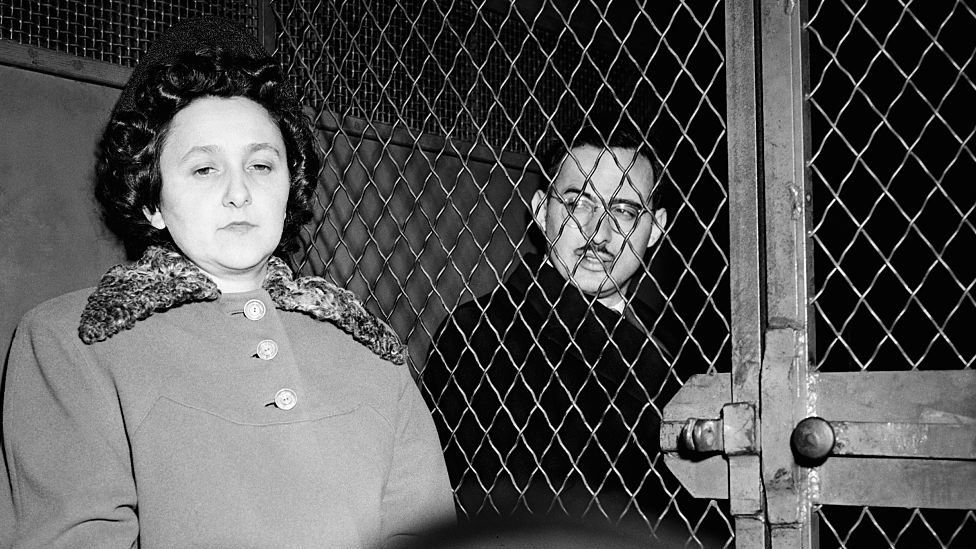
In addition to Jonathan Pollard, who was exposed as a spy for Israel, the Espionage Act also led to the arrests of Aldrich Ames, a CIA officer, and Robert Hanssen, an FBI agent, who were both exposed as having shared information with the Soviet Union.
The New York Times reports that since 2018, there have been about a dozen criminal prosecutions for the unauthorized retention of national security documents under the Espionage Act.