
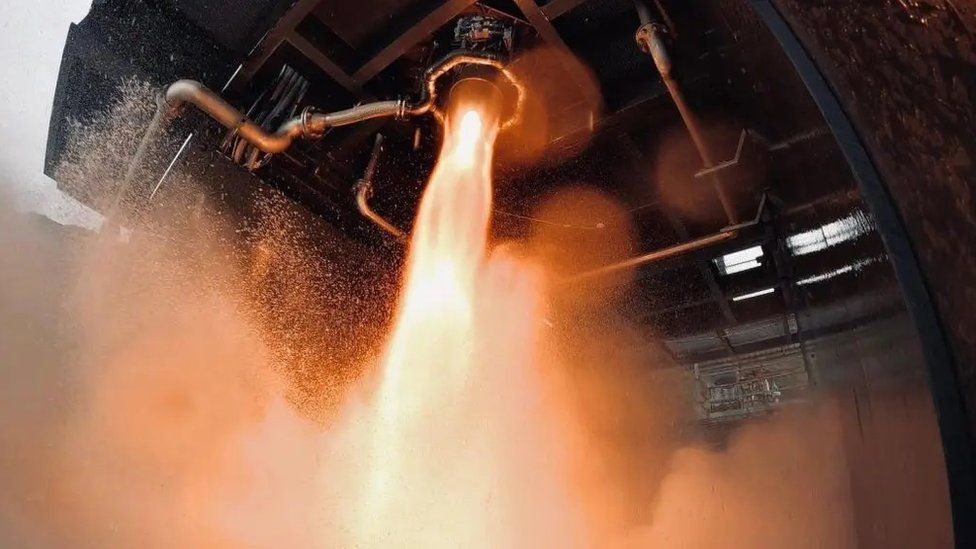
In preparation for its first commercial orbital launch, the rocket company Skyrora has begun testing a new 3D-printed engine.
The company announced that at its Midlothian testing facility, it was running "full duration" tests on a new engine design.
By using its Skyprint 2 machine, which Skyrora claimed cut production time in half and reduced costs, the new model was 3D printed.
Using its Skyrora XL vehicle, the Edinburgh-based company intends to launch satellites into orbit from Scotland.
Subject to the Civil Aviation Authority's approval, these will depart from the SaxaVord Spaceport being built on Shetland.
According to the company, the improved engine cooling chamber is a feature of the new engine design.
The duration of each engine test will be 250 seconds, which is the same as the duration of an actual mission to orbit the earth.
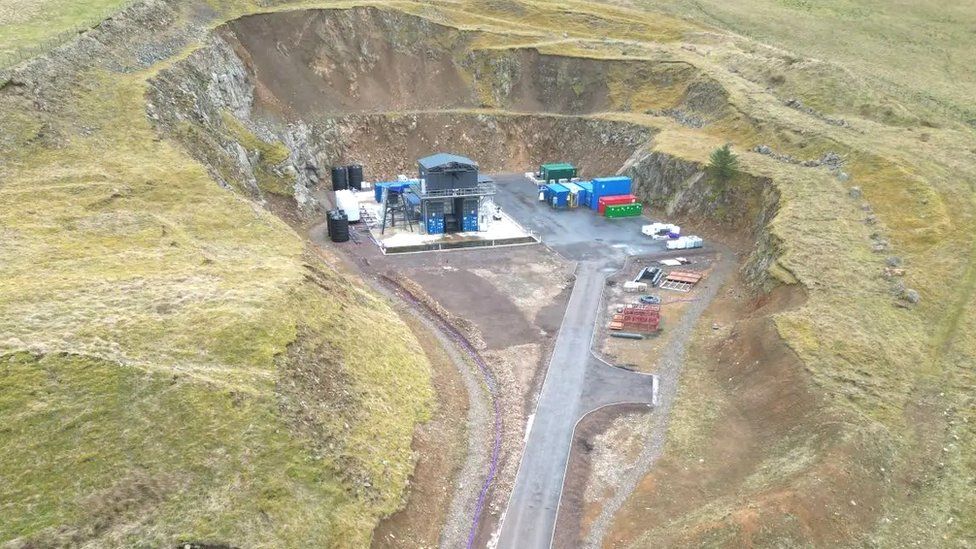
Up until the summer, trials will be conducted at the Skyrora site in Gorebridge.
According to the CEO, Volodymyr Levykin, "Skyrora is getting closer to an effective commercial orbital launch with the new models of 3D printed engines.
"The new engine technology created by Skyrora's engineers and the dedication to a sustainable design are testaments to the innovation taking place in the UK space sector," said Skyrora. ".
The Civil Aviation Authority and Skyrora have been collaborating to advance Skyrora's application for an orbital launch vehicle license, which was submitted last year.
The Skylark L booster of Skyrora's first attempt to reach space in October of last year ditched in the ocean shortly after launch.
The company wanted to fly its vehicle over 100 kilometers (62 miles) from Iceland's Langanes peninsula.
The 11-meter rocket, however, crashed back into the water just 500 meters from the launch pad due to a technical issue.
An early opportunity to test systems and procedures was intended for the sub-orbital flight.