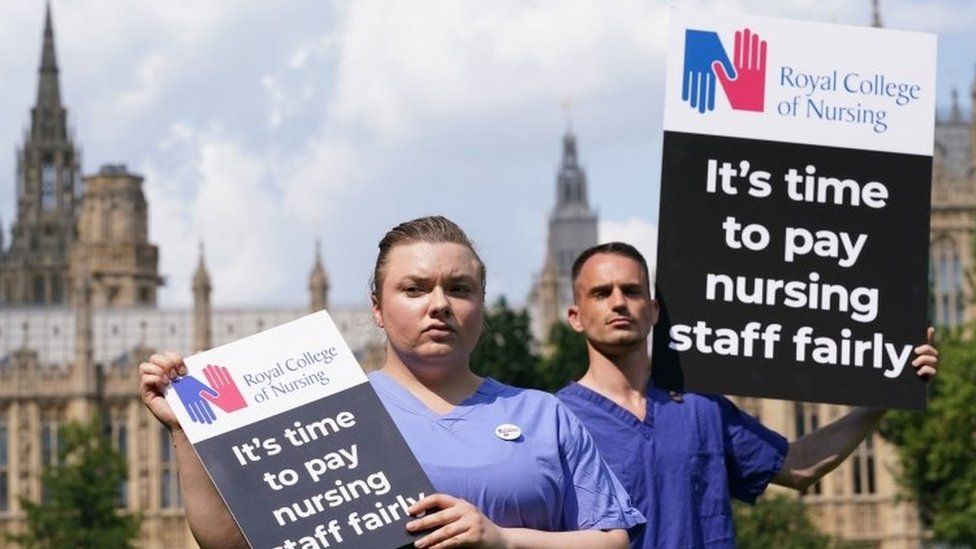
The Royal College of Nursing (RCN) has made its largest walkout announcement of the English pay dispute.
From March 1 to March 3, its members will participate in a 48-hour strike at half of the hospitals, mental health facilities, and community services.
Additionally, the union will request that workers in crucial fields like chemotherapy and critical care participate in a first-ever strike.
The union was charged with endangering patients by ministers.
"We are closely collaborating with NHS England on contingency plans, but this action will inevitably cause further disruption," added Health Secretary Steve Barclay.
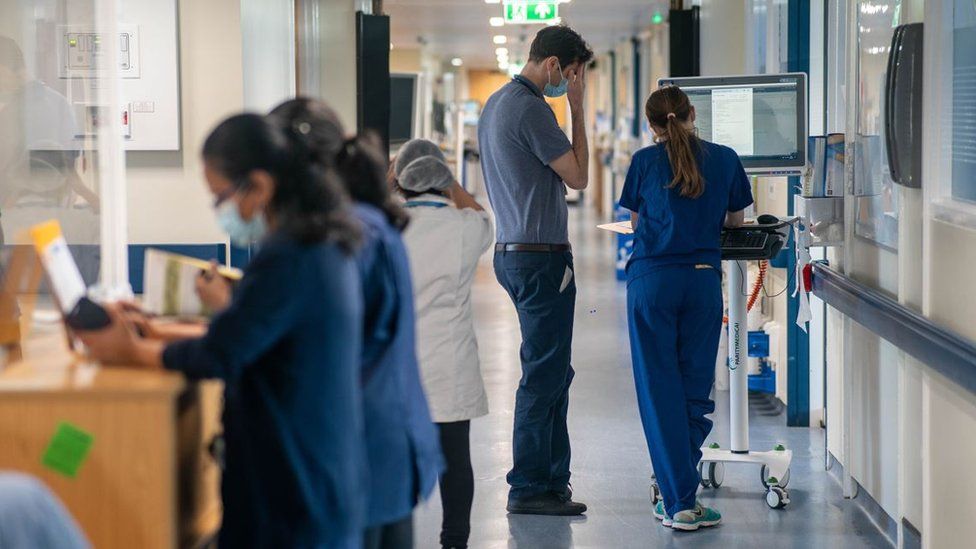
Dialysis, neonatal care, intensive care, paediatric, A&E, and chemotherapy were among the core services that the RCN exempted from strike action during the previous six walkouts.
Any service that wants RCN members to provide life-and-limb coverage, as required by trade union laws, will also need to negotiate with union leaders rather than setting up local agreements with local reps.
In areas like adult A, the RCN believes that this has resulted in an excessive number of local exemptions.
Instead, services will be required to cover services during the strike with nurses who are not RCN members or other health professionals.
The RCN won't agree to provide cover until those options have been explored completely.
The RCN has never before declared a 48-hour strike in addition to the walkout.
Stoppages have occurred over the course of two days, but they only lasted for 12 hours each.
This strike will cover all of the locations where the RCN has a mandate and involve more than 100 services.
At each trust, separate votes were taken during the strike ballot.
Approximately 50% of trusts did not receive the necessary number of votes for action to be taken.
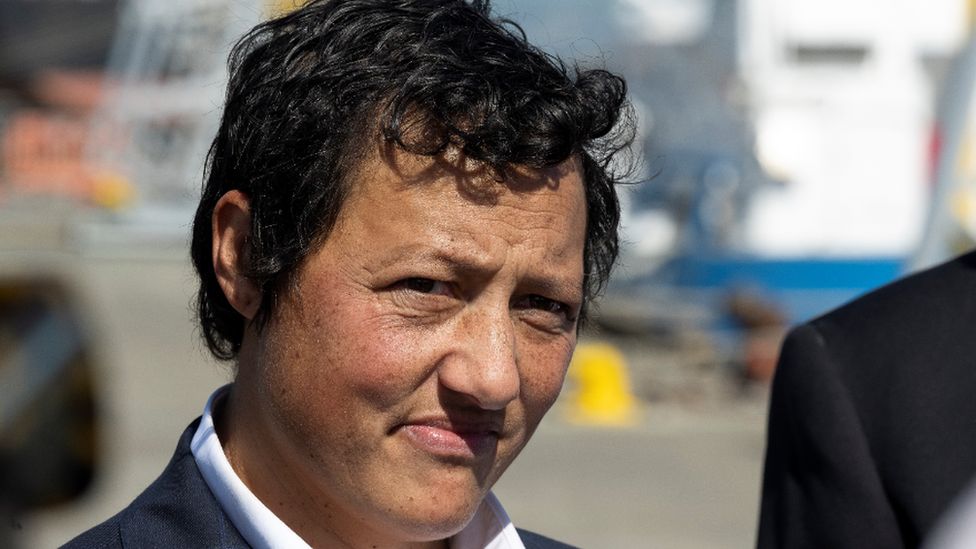
Pat Cullen, general secretary of the RCN, stated: "I have today requested even more nursing staff to join this strike with a heavy heart. " .

Although the RCN requested a pay increase of 5% above inflation, the government has only given staff below the grade of doctors an average raise of 4.75%.
Despite the fact that the new offers were significantly less than what the union was seeking, strikes have been called off in Scotland and Wales.
Due to the lack of a functioning government in Northern Ireland, where employees received a raise of 4.75 percent, no strikes are being held.
"The stakes have just gotten higher and NHS leaders are becoming more concerned about the escalating waves of industrial action," said Matthew Taylor, chief executive of the NHS Confederation, which represents health managers.
They are in dire need of an answer.
. "