Switzerland's voters have approved a new climate law that will reduce the use of fossil fuels and achieve net-zero carbon emissions by 2050.
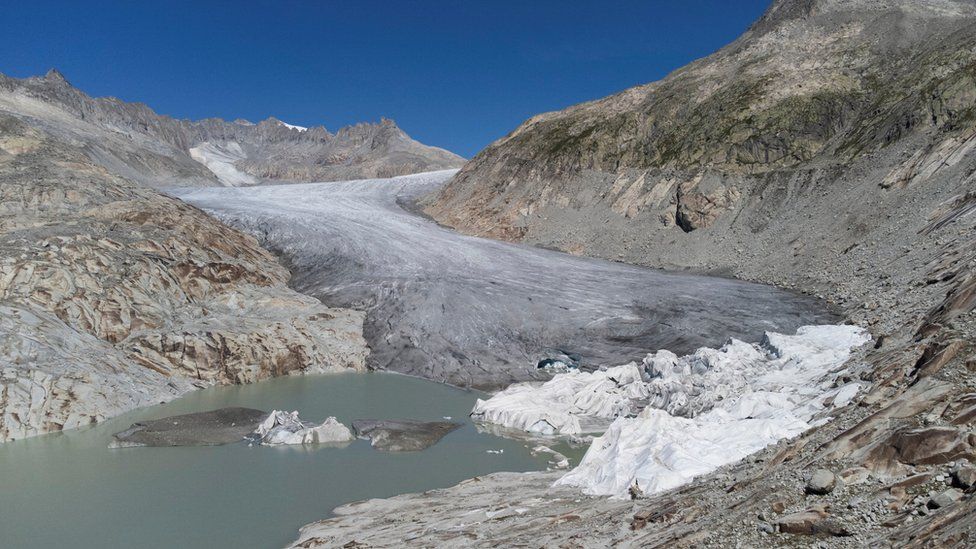
According to the government, as the glaciers in the Swiss Alps quickly melt, the nation must safeguard both its environment and energy security.
The law calls for a shift away from the use of fossil fuels and toward the use of renewable energy sources.
In the referendum held on Sunday, 59.1 percent of voters supported the green energy proposals.
The actions, according to critics, would increase energy prices.
Almost all of Switzerland's major parties backed the legislation, with the exception of the right-wing Swiss People's Party (SVP), which called for the referendum after objecting to the government's proposals.
The majority of Switzerland's energy needs are imported, and all of the oil and natural gas used there are also imported.
The climate bill commits to spending 2 billion Swiss francs ($2 point 2 billion; £1 point 7 billion) over a ten-year period to support the promotion of the replacement of gas or oil heating systems with climate-friendly alternatives, as well as 1 point 2 billion SFr to encourage business innovation in green technologies.
As a result of climate change, glaciers in the Alps are particularly vulnerable to temperature increases. Between 2001 and 2022, a third of their ice volume was lost.
Leading Swiss glaciologist Matthias Huss, who has closely monitored the retreat of the glaciers, praised the "strong signal" sent by Sunday's vote and expressed his happiness on Twitter, writing that "the arguments of climate science were heard.".
It was "an important step for future generations," according to Socialist Party lawmaker Valerie Piller Carrard.
In a second referendum, 78.5% of voters overwhelmingly supported the proposal to impose a 15 percent global minimum tax on multinational corporations.
Switzerland signed on to an OECD agreement in 2021 to establish a minimum tax rate for large corporations, joining nearly 140 other nations that had done so.
The proposal to amend Switzerland's constitution in order for it to ratify the agreement received "very strong acceptance rate," according to Finance Minister Karin Keller-Sutter.
The referendum turnout on Sunday was around 42%.