For the seventh consecutive month, US inflation has decreased, but prices have continued to rise much faster than is deemed healthy.
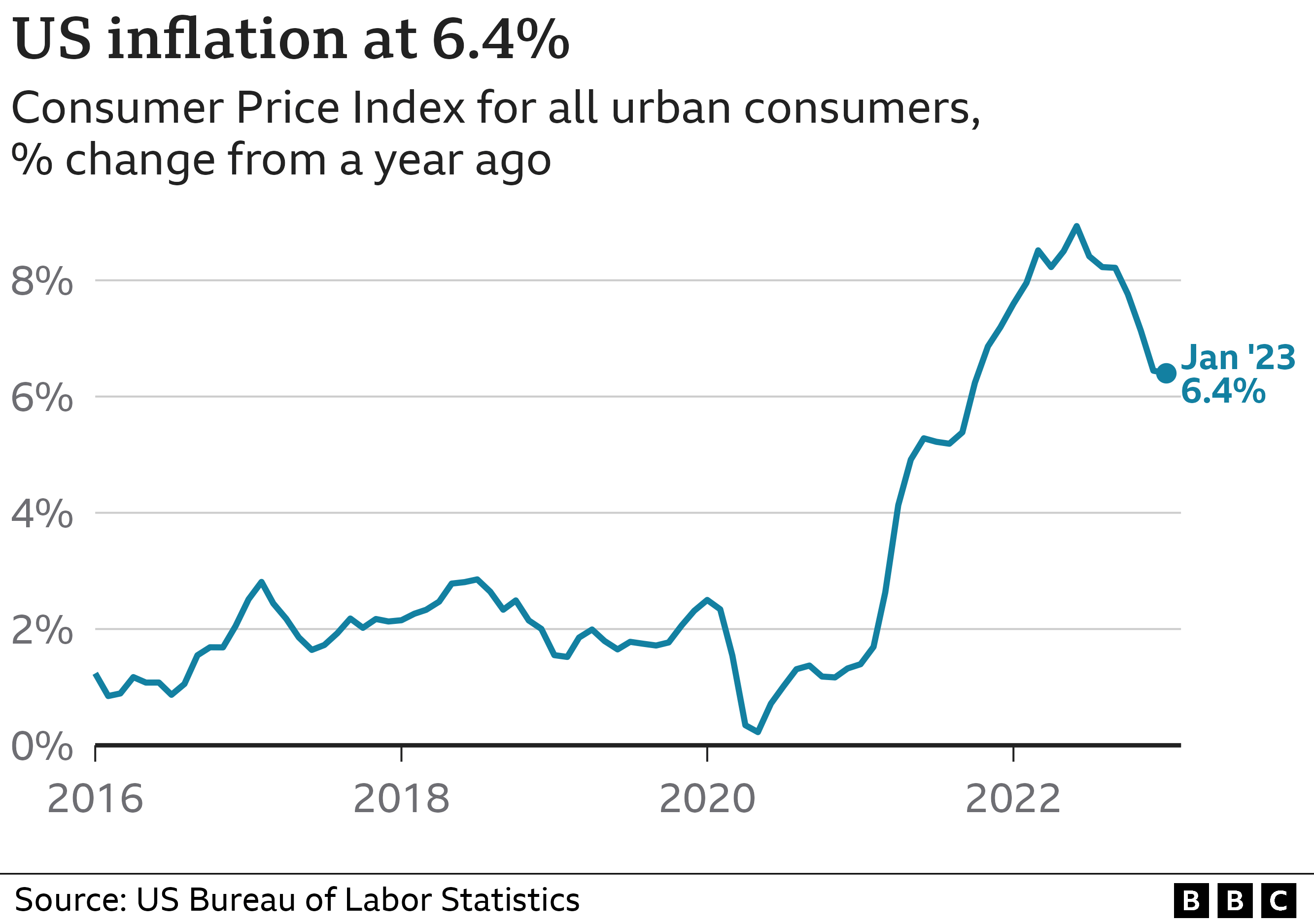
Inflation, which measures the rate at which prices rise, increased by 6 point 4 percent in the year leading up to January.
From 6.5 percent in December, that was just barely lower.
Despite recent signs of improvement, officials have cautioned that price stabilization will take time.
Beef prices have decreased from a year ago among food costs. However, the cost of butter and margarine has increased by almost a third, and the price of eggs has increased by 70% since January 2021.
In comparison to a year ago, prices for used cars and trucks, smartphones, and televisions have all decreased. Even so, the cost of housing has increased by more than 7%, and the cost of services like haircuts is still rising quickly.
In an effort to cool the economy and relieve pressures driving up prices, the Federal Reserve, the US central bank, has aggressively raised interest rates in response to the issue.
However, the jobs market has remained stronger than anticipated, igniting a fierce debate among economists about how high borrowing costs will have to go in order to get inflation back to the 2 percent rate that is thought to be healthy - and whether the economy can handle the increase without going into a painful recession.
The Federal Reserve is likely to continue raising interest rates in light of the most recent inflation data, according to analysts.
According to Ronald Temple, chief market strategist at Lazard, "disinflation is still occurring, but at a slower rate than the Fed might prefer.". The Fed needs to observe more moderate price increases and less tightness in the labor market in order to halt the tightening cycle. Both of them are still in line. ".
In 2021, prices in the US skyrocketed as the economy roared back to life following pandemic lockdowns. Price increases were made by businesses that were experiencing shortages and rising costs.
Inflation reached 9 point 1 percent in June, the highest level since 1981, as a result of the war in Ukraine, which disrupted supplies of food and energy.
Later, those forces cooled. But many businesses have persisted in raising prices while citing rising costs.