12-year-old Deivid Acosta, a talented pitcher and first baseman from Havana, gets excited when he talks about possibly playing baseball in a competitive league in the United States.
He's now dangerously close. Due to an agreement made a few years ago, Cuban kids will participate in the Little League World Series in Pennsylvania in August for the first time.
Deivid is sure he will be selected.
In front of a distinguished guest, US Little League President Stephen Keener, the two-time Cuban homerun leader in his age group batted in Havana's early-morning heat with assurance.
Deivid smiles when asked where he sees himself playing in the future, "The New York Yankees, always.".
However, unlike top baseball prospects from the Dominican Republic or Puerto Rico, his path to the US Major League is far from certain.
Deivid, like the majority of Cubans, grew up in an environment complicated by both communist rule and the US trade embargo. The ability of young players like Deivid and his teammates to train or travel abroad has long been constrained by a convoluted bureaucratic combination of the two.
By promising to provide bats, gloves, and balls as well as one day "build a Little League field in Cuba," Mr. Keener subtly acknowledged the impact of the embargo on Cuba's youth teams.
However, the lack of more essential items like eggs, bread, soap, and medicines is simply a reality for the young players. The list of shortages fluctuates but never gets shorter.
President John F. Kennedy expanded the export ban on February 7, 1962, to almost all goods. It has now existed for the longest period of time in history.
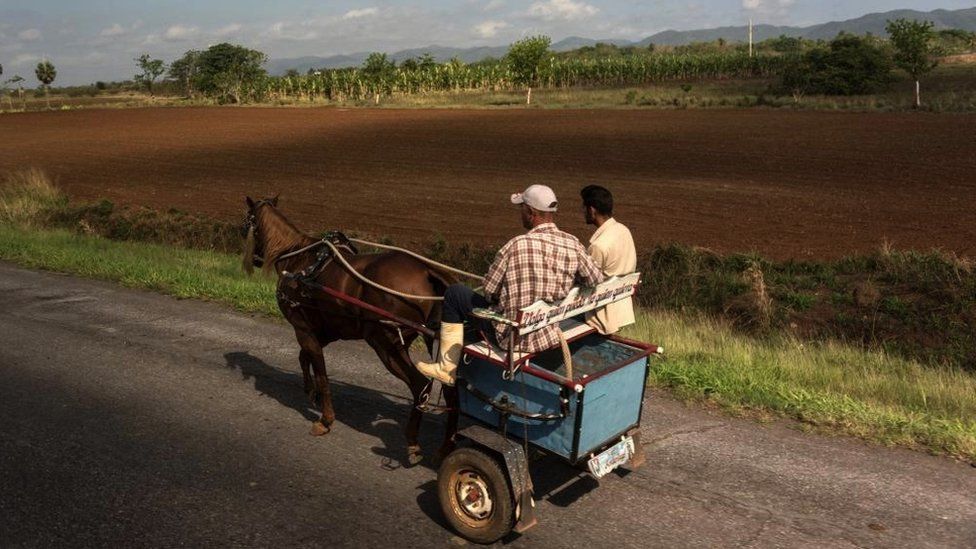
International freight companies are discouraged from shipping to the island by the embargo, which prohibits cargo ships from docking in US ports for 180 days if they have previously docked in Cuba. The sale of medical supplies, automobile parts, and household goods to Cuba is also prohibited.
The United Nations labeled the embargo on Cuba as "unjust" in 2018 and estimated that it has cost the island's economy $130 billion (£108 billion) over the previous six decades.
Washington hardly ever contests the harshness of the embargo. Indeed, that is the intention.
But it's also the catalyst for an endless game of who is to blame for what: Is the US sanction the root of Cuba's severe economic issues and scarcity, or is it the ideal cover for the Cuban government to conceal its own failings and shortcomings?
Every ardent revolutionary who maintains that the embargo is the only cause of Cuba's problems has an equally ardent adversary who blames Cuban communism for those problems.
"One way to look at it is that the two have interacted with each other over the course of six decades to produce a catastrophe, an economic and social catastrophe," says Ricardo Torres, a Cuban economist and research fellow at American University in Washington, DC.
"There is no doubt that the embargo adds to the strain on Cuba's development. But I believe that the country's economic model, the system, is currently the main barrier.
Regardless of where one stands on the never-ending argument, it is undeniable that the dire situation has led to a mass exodus that the island hasn't seen in a long time.
Miriela Cruz is one of those frantically trying to get out of Cuba. She spoke to the BBC in August 2021 as a cancer patient and mother of two children after her son was imprisoned as part of a dragnet of arrests following nationwide anti-government protests the previous month. Cuba's government represses all forms of dissent and forbids public demonstrations.
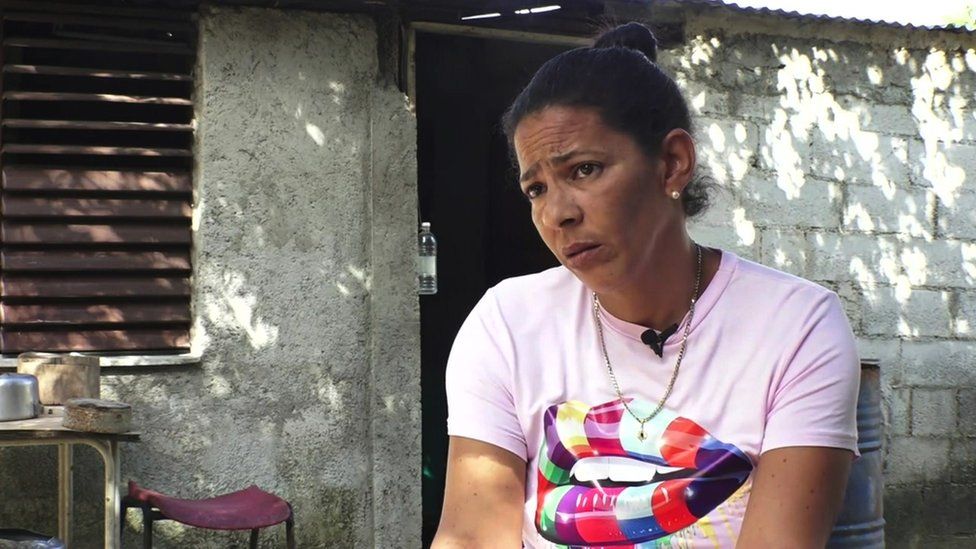
She was emotionally and physically spent from her chemotherapy treatment, which had drawn her out.
Miriela came into conflict with the authorities when she spoke out against her son's detention. Her life has gotten even harder since she was labeled a "counter-revolutionary," and she claims that Cuba's state security constantly harasses her.
"I genuinely desire more than anything to depart from this nation. There aren't any of the medications I need, not even painkillers, for my medical conditions. There isn't any food; some days, I merely skip meals. There simply isn't a future for me here.
According to economist Ricardo Torres, the embargo has allowed the Cuban government to "look the other way in terms of things that need to be addressed" while the state-run, centrally controlled model has failed to benefit people like Miriela.
The Cuban government "still has a lot of agency when it comes to transforming the reality of the country," he adds. This includes relaxing restrictions on the private sector, reforming the broken banking system, and loosening the military's vice-like hold on the import-export industry.
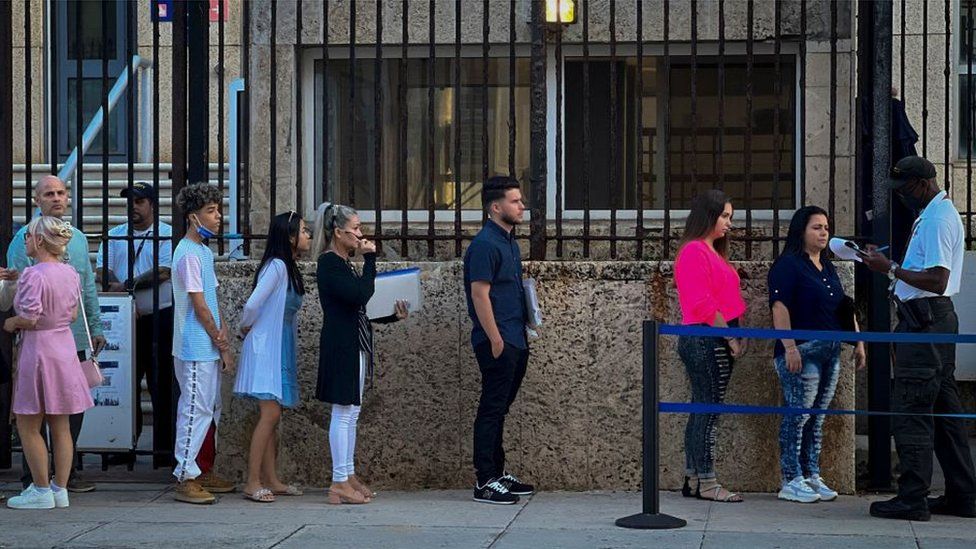
The Biden administration recently unveiled a new humanitarian visa program in response to the large number of Cubans who are currently arriving on US soil. Every day, a long line of individuals holding their paperwork form in front of the US embassy in Havana.
A green shoot of improved ties came from Delaware, the home state of Joe Biden, with the majority of Cuba's arable land being farmed by oxen-and-plough or Soviet-era tractors. Insisting that "the potential for collaboration today is greater than ever before," a visiting agricultural delegation expressed their hopes for a more normal trade relationship.
However, Cubans are well aware that only the US Congress has the power to lift the embargo and have heard similar talk in the past, particularly during the thaw between Washington and Havana that occurred during the Obama administration. That seems like a very far-off possibility given the wide divisions in the House of Representatives.
As her health continues to be so precarious, Miriela is debating taking the greatest risk possible by sailing across the Florida Straits.
She declares, "I want to live it with dignity for however long I have left to live, whether it's two years, three days, or a month.". "There is no hope or tomorrow here.
.