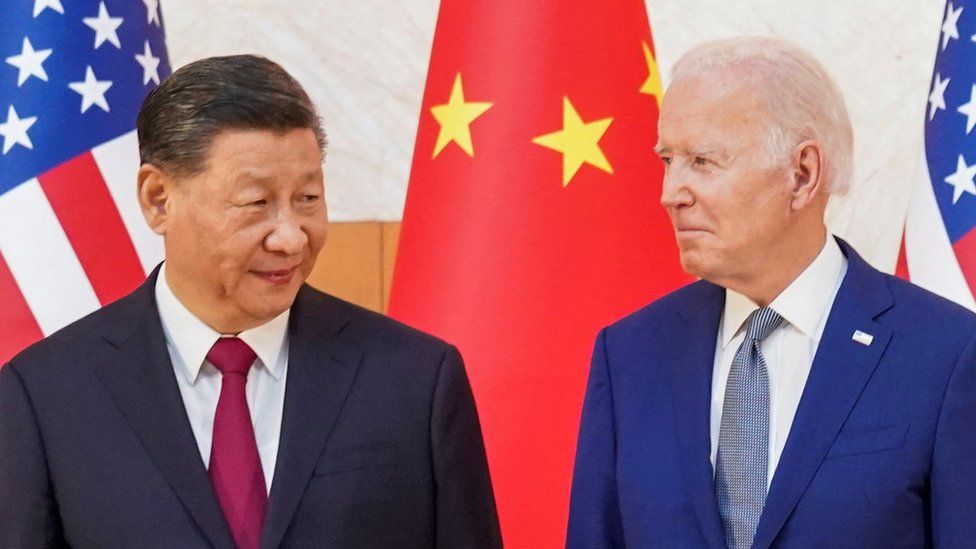
Nearly five months after a significant rift in relations over a Chinese spy balloon, US Secretary of State Antony Blinken made his first trip to China on Sunday.
His initial trip was abruptly cut short because the balloon, whose purpose China claims was weather monitoring, drifted across the US before being shot down by American military aircraft.
It is unknown at this time whether Mr. Blinken will meet Chinese President Xi Jinping, who made an appearance in Beijing on Friday alongside Microsoft co-founder Bill Gates. His visit will include meetings with China's top foreign policy officials.
There are many issues that the two global superpowers are concerned about, including well-publicized differences and potential areas of cooperation.
Here are three important topics that may be on the top of the agenda.
First and foremost, Mr Blinken's visit is about re-establishing diplomatic interactions of any kind.
When senior US officials met in Vienna, Austria, last month, there was a preliminary thawing of the ice.
However, Mr. Blinken is the highest ranking Biden administration official to visit China, and this is the first trip to Beijing by a US secretary of state since October 2018.
In a pre-trip briefing, Deputy Assistant to the President and Coordinator for Indo-Pacific Affairs Kurt Campbell said that now is a good time to start talking again because doing so in and of itself lowers the risk of conflict.
"We cannot allow our differences to prevent us from advancing on the universal priorities that call for our united efforts. ".
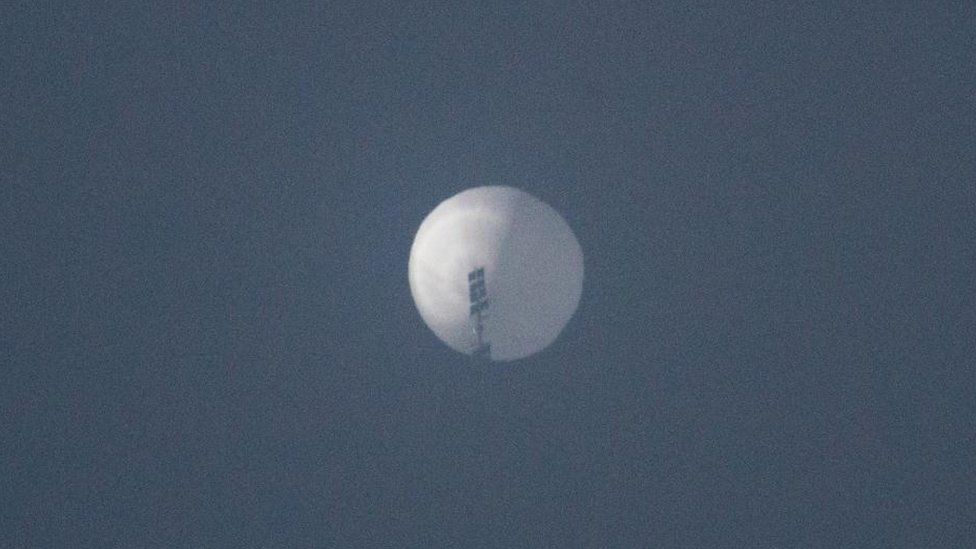
However, the Chinese response to Blinken's visit has been less than warm.
Chinese Foreign Minister Qin Gang reportedly told Mr. Blinken during a call they had on Wednesday night that "it is very clear who is to blame" for the recent deterioration in relations. This is according to the official Chinese account of the conversation.
According to Mr. Qin, the United States should stop interfering in China's internal affairs, respect China's concerns, and stop undermining China's sovereignty, security, and development interests in the name of rivalry.
Any significant announcements made as a result of this visit have been minimized by the US. It appears that the only "deliverable" from the meetings will be that they even took place, to use diplomatic jargon.
The senior East Asia diplomat for the State Department, Daniel J. Kritenbrink, warned against expecting any kind of revolution or change in how the two countries interact.
Both sides could build on the interaction between US and Chinese officials if the meeting results in more of it.
Because he has refused to reverse trade policies put in place by his predecessor, Donald Trump, President Biden's relations with China have gotten off to a rocky start.
Included in that are import tariffs on Chinese-made goods worth billions of dollars.
In order to maintain US superiority in the most cutting-edge electronics technologies, Mr. Biden has applied even more pressure in some areas, placing limitations on US computer chip exports to China.
China's response was to impose its own restrictions on computer memory chips produced by Micron, the biggest US producer.
Even though Mr. Campbell acknowledged China's worries, he asserted that the US would defend and explain what it has done so far and what might come next.
The illegal drug trade might offer more room for cooperation if computer technology is a field where the two superpowers will engage in bitter competition.
The export of chemical components made in China that are used to create fentanyl, a synthetic opioid that is many times more potent than heroin, is something the US wants to restrict.
In the past seven years, the number of drug overdose deaths involving fentanyl in the US has more than tripled.
"This is an absolutely critical and urgent issue for the United States," said Mr Kritenbrink - but it is one that presents its own challenges.
There were rumors after the balloon incident that China was considering sending weapons to Russia, where they would be used right away in the conflict with Ukraine.
US government officials have backed away from those accusations of late, removing what could have been a particularly contentious issue for the two nations that risked turning the Ukraine-Russia conflict into a proxy war between the US and China.

But expect Mr Blinken to echo warnings given to the Chinese in Vienna that there would be serious consequences if China gives military and financial assistance to Russia.
US and Chinese warships have been facing off in a high-stakes game of chicken over the Taiwan Strait and the South China Sea. China claims the area as their own, while the US insists they are international waters.
Mr Blinken and his diplomatic team have said that his goal in this trip is to "de-risk" the tensions, and renewed communication is the place to start.
Achieving more may be a tall task for now - and more extensive co-operation could become more difficult for Mr Biden as anti-China rhetoric in Washington is sure to heat up when the 2024 presidential elections approach.
A satisfactory outcome from this trip for both sides might be simply the opening of communication channels that prevent an incident leading to military conflict.