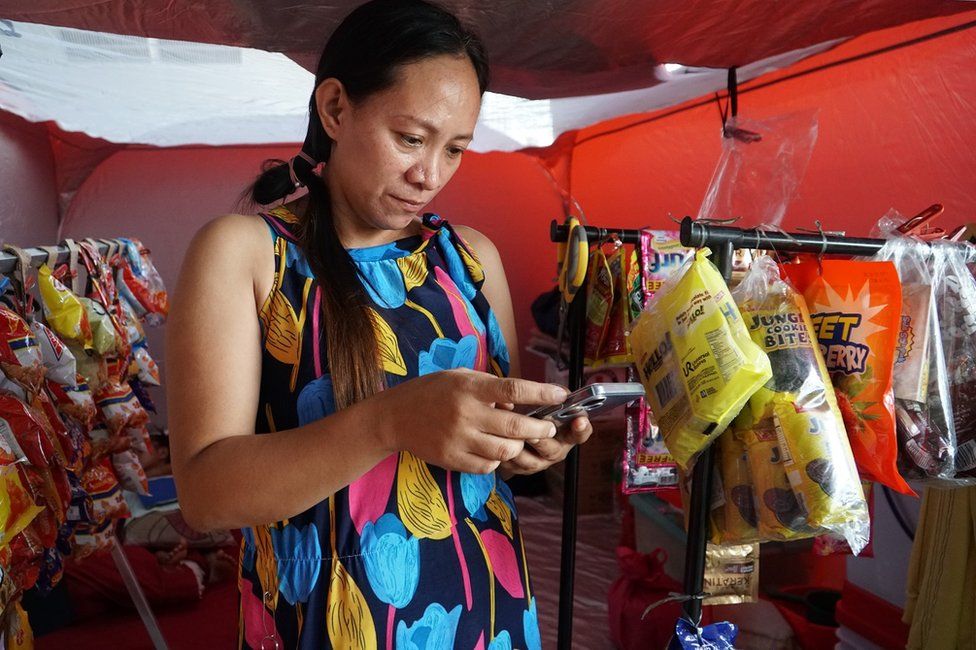
In the midst of a maze of tents that are filling the air with the aroma of raw fish, Monet Oxales sets out packages of crisps and sweet bread for sale. It's an hour before noon, but instead of her village near the raging Mayon volcano in the Philippines, the customary lunchtime rush is taking place in a shelter.
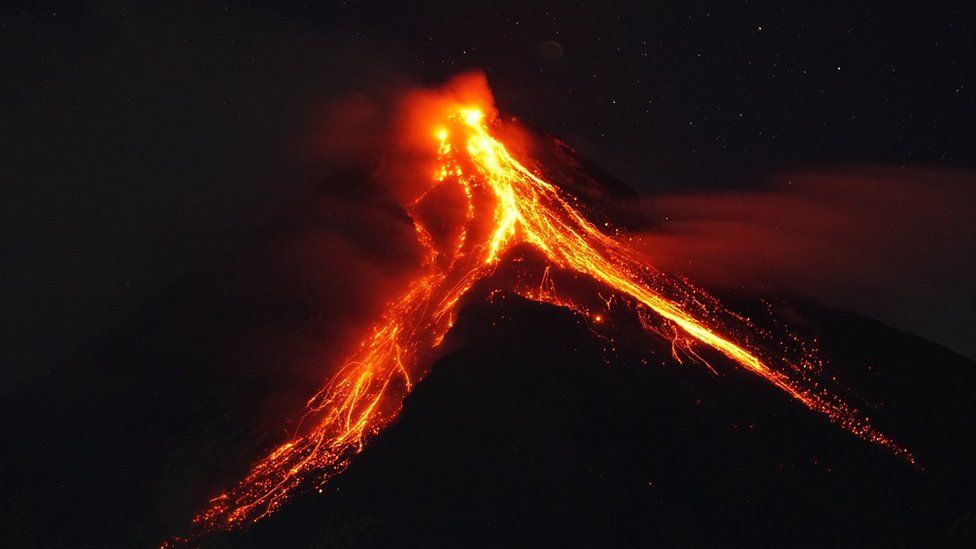
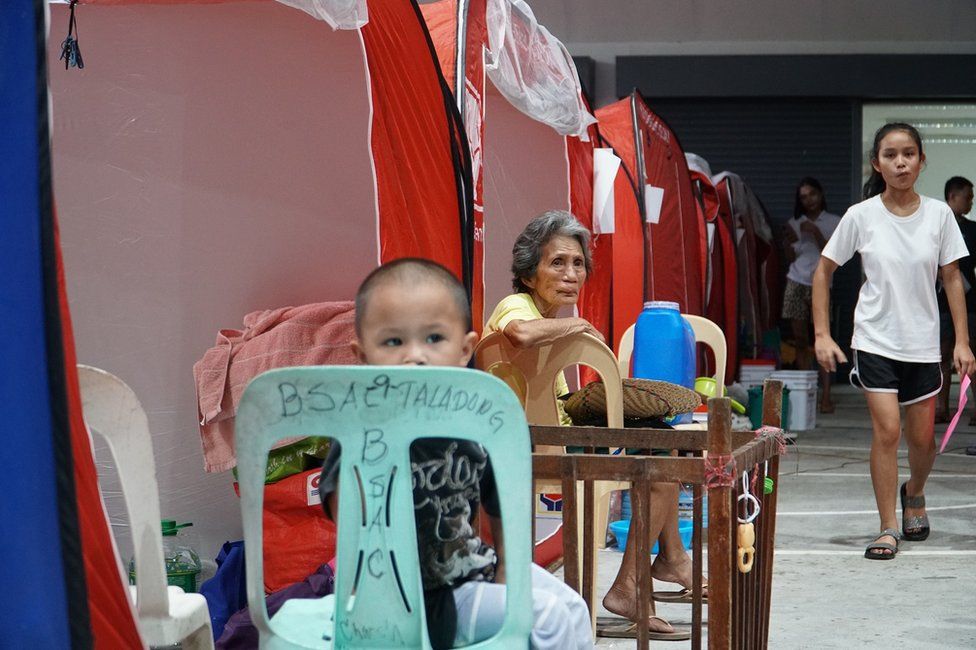
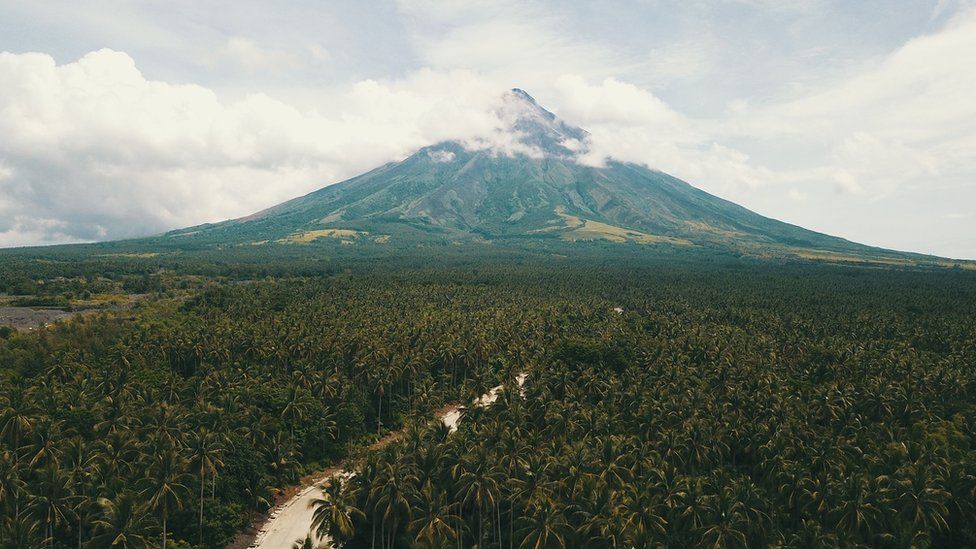
As Mayon, the country's most picturesque yet highly active volcano, oozes lava and is constantly monitored for a potential violent eruption, thousands of people in the Philippines' Albay province in the northeastern peninsula of Bicol are staying in shelters for an indefinite amount of time.
For those who have lived in Mayon's shadow their entire lives, spending weeks or even months at a time in evacuation centers has become commonplace. This entails that Ms. Oxales travels with her tiny grocery store. She also offers small detergent packs for those who need to do their laundry.
In her 40 years, the woman has resided in shelters five times. She's changed tents twice since getting here about a week ago. Ms. Oxales is hoping that the volcano will subside soon so that her family can go back to the one piece of property they own.
As she cares for her five-year-old daughter, who has been running a fever since they left their home in the farming town of Guinobatan, she tells the BBC, "We can't totally leave our village because we're poor.
"Our location is lovely. The only significant issues we face are Mayon eruptions. It is an act of nature. We have no choice but to temporarily depart from our village. ".
She worries that the constant inhalation of volcanic ash will make her children ill. She makes sure to keep one red pail full for her family of four because the only potable water in her shelter is trickle-fed. Additionally, they require electricity to power their rechargeable fans and cell phones.
We have no choice but to put up with this, she says.
Motor taxi driver Benjamin Nasol, who lives in another shelter, is concerned about the small pig farm he abandoned. To make sure that his animals are fed and secure from thieves, he spends a few hours each night driving back to his house in Camalig town.
According to the 53-year-old, "We are used to it.". He claims that since this is his third time in a volcano shelter, the sight of molten rocks cascading from Mayon's crater does not in the least frighten him.
Even if you're tired or worn out, you still have to fulfill your obligations in the village before returning to your family in the evacuation center, he says.
Early in June, after noticing more frequent earthquakes and rockfalls from the crater, state scientists raised the alarm about increased activity on Mayon. On a five-tier scale that assesses the likelihood of an explosive eruption, it is currently at the third-highest level of alert.
Although at a slow rate, Mayon is technically erupting.
Volcanologist Paul Alanis scans the sky from a hilltop observatory for signs that could raise the alert level. The quantity of people who must be evacuated is then determined by those alerts. At least 13,000 people moved right away to shelters when Level 3 was declared on June 8. In the days that followed, numerous thousands more people were evacuated.
Mr. Alanis uses a seismometer to gauge underground motion that is hidden from view.
The most obvious indication that Mayon was acting up, according to Mr. Alanis, was the enlargement of a dome on its crater left by its most recent lava eruption in 2018. As early as April of this year, that alleged lava dome seemed to be expanding.
In the observatory last week, there was a feeling of unease.
The state of the volcano could deteriorate at any moment. Getting the people out had to come first, Mr. Alanis tells the BBC.
In order for the provincial governor and the people in charge of disaster response to be adequately prepared, it is also part of the volcanologist's job to explain what is happening on Mayon to them.
According to Mr. Alanis, the lava flows' slow movement could indicate two things. Either the volcano lacks the hot gas necessary for a powerful eruption, or the flow of molten rock is blocked, making it difficult for gas to reach the surface.
"We need to look for additional causes for that. But at this time, I'm not really sure," he says. "At the moment, no technology exists that can anticipate when a volcano will erupt. ".
The Pacific Ring of Fire, so named because of its historical volcanic activity, is where the Philippines is located and has 24 active volcanoes.
In the same week as the evacuations, an unrelated 5.8-magnitude earthquake that struck south of the Philippine capital of Manila forced the temporary evacuation of office towers and high-rise structures.
But due to its nearly perfect shape, Mayon is the most legendary of the country's volcanoes. According to Guinness, it is the world's most conical volcano.
Numerous tourists have been drawn to the crater by the lava's ferocious red glow. The Bicol folktale character Daragang Magayon and the Filipino Australian beauty queen Catriona Gray, who won the 2018 Miss Universe title while wearing a gown that matched Mayon's lava flows, have both served as inspiration for internet memes.
Zaira San Pascual's relocation of her father's wake to the tent village has made life in the shelter more challenging for her.
When her family called to inform her that they were moving to a shelter, the 39-year-old Manila office worker was already on the bus to Bicol. She recalls asking herself in fear, "How could we do it?".
As soon as she was settled in, she realized that this situation was not as bad as those she had encountered as a child.
"You'll notice people grinning, laughing, and making jokes. It serves as their coping mechanism and prevents them from reflecting on how miserable their situation is, according to her.
People at the shelter are left with no choice but to wait in the quiet of the night and occupy themselves. They congregate in small groups to joke about which members of their tent village have become the Marites, or neighborhood snitches.
Although leaving dangerous areas is required, some people, like Roger Asilo, 72, still choose to stay in their homes.
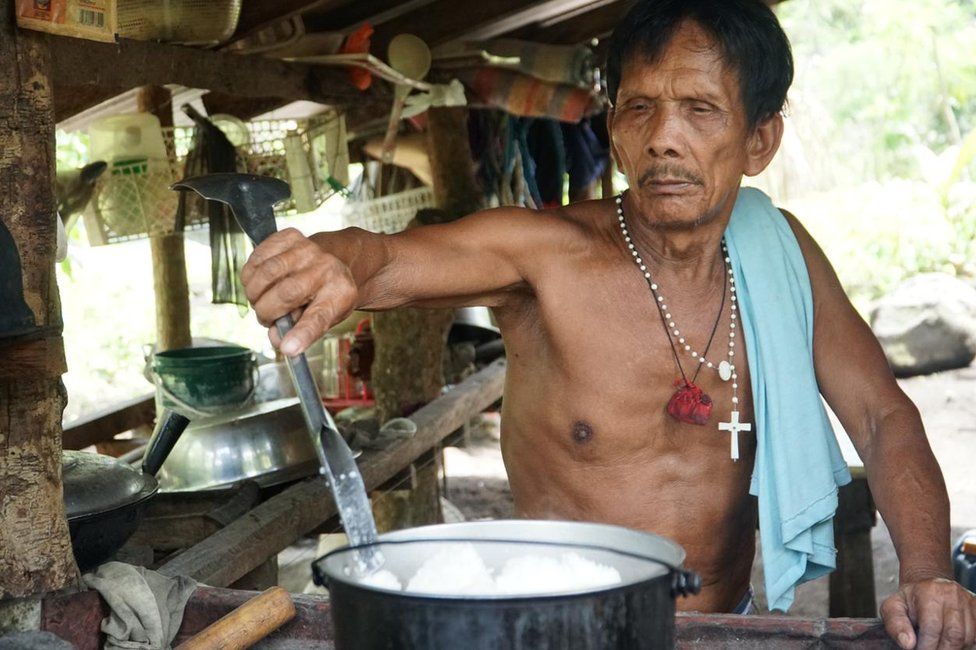
Mr. Asilo ducked behind a tree to avoid getting dragged onto a lorry hauling Guinobatan villagers to shelters.
He believes he has gotten better at recognizing when the volcano is acting up enough for him to pack his bags over the years. Additionally staying behind to take care of him is his son.
Mr. Asilo claims that for a fee, he would much rather care for two pigs that a friend had left in his care.
He sits on a bamboo bench outside his house at night and observes the glowing lava flows.
He tells the BBC, "I always pray that it would stop when I look at the volcano spewing lava.".
"I'm scared, but I'm also ready.
. "