An estimated 3,000-year-old mummy has been discovered by Peruvian archaeologists working at the site of a trash dump in the nation's capital, Lima.
The mummy's hair and skull were first discovered by dig assistance students from San Marcos University.
Before beginning their meticulous search for historic remains, archaeologist Miguel Aguilar claimed they had cleared the area of eight tonnes of trash.
It is believed that the mummy originates from the Manchay culture.
From about 1500 BC to 1000 BC, the Manchay inhabited the region near present-day Lima.

They are noted for constructing U-shaped temples that face the rising sun.
Mr. Aguilar clarified that the mummy had been positioned in a tomb in the middle of a temple with a U-shape. He claimed that the body had been disposed of flat, in keeping with the "formative era" of the Manchay culture, which was roughly 3,000 years ago.
The deceased's body was covered in cloth made of cotton and plant fibers.
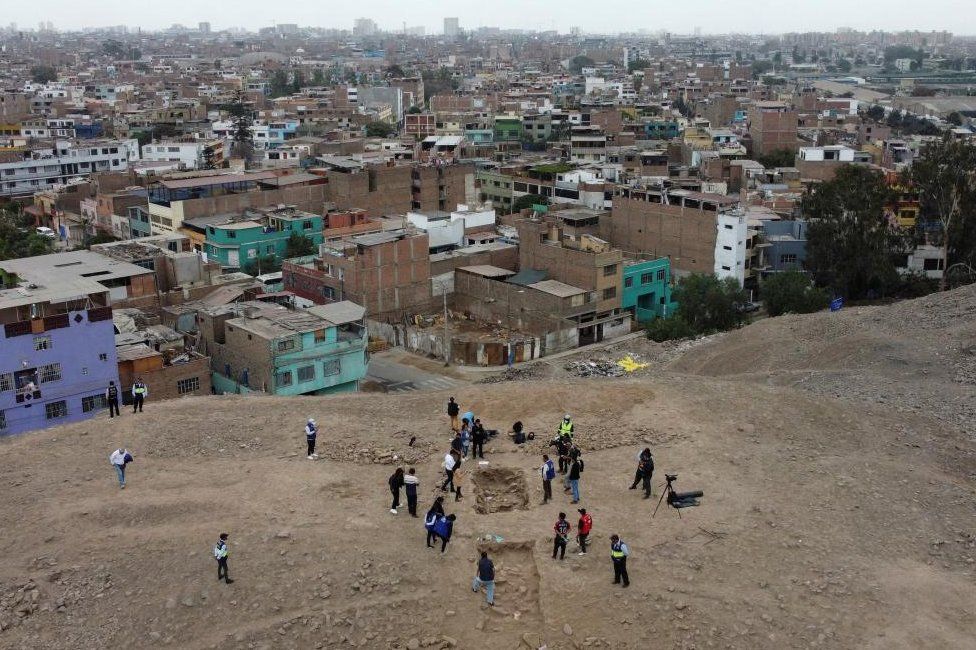
During the final stage of this temple's construction, the individual "had been left or offered [as a sacrifice]," the archaeologist claimed.
Before the Spanish conquistadors, who traveled to the Americas as part of the Spanish conquest, mummification was practiced by a number of cultures in what is now Peru.
Others were brought out and paraded during significant festivals, while some mummies were buried, frequently in the position of a foetus.